Discover Balmoral
Balmoral grew beside the old railway over Big Hill. Its former school and the plans for the village open a story of railway workers, families and community life.
Balmoral through time
A village beside the railway
Balmoral grew with the old railway between Picton and Mittagong. A Society history reproduced in council heritage papers explains that Big Hill Lower Siding station opened in 1878; an extra locomotive helped haul trains up the steep grade to the upper siding, later Hill Top. A private village developed around the station as landowners subdivided land for settlement.[10]
The railway was built through difficult country before the station village took shape. Society research describes construction camps serving the lower and upper ends of the Big Hill grade, and a cutting made with hand tools and explosives. Two workers, Patrick McHugh and Jeremiah Connor, were killed in a blasting accident in 1863. When the contractors later failed, workers and subcontractors pursued unpaid wages. The Rocky Waterholes camp belongs to this wider Hill Top-Balmoral railway landscape, not necessarily to present-day Balmoral.[15]
The station was called Bargo before being renamed Balmoral in 1888. Sources differ on whether the Bargo name was adopted in 1880 or 1881, so the date needs further checking. The 1919 railway deviation left this route as the Loop Line. The Society also records surviving cuttings and culverts on the earlier railway alignment near Hill Top and Colo Vale.[10]
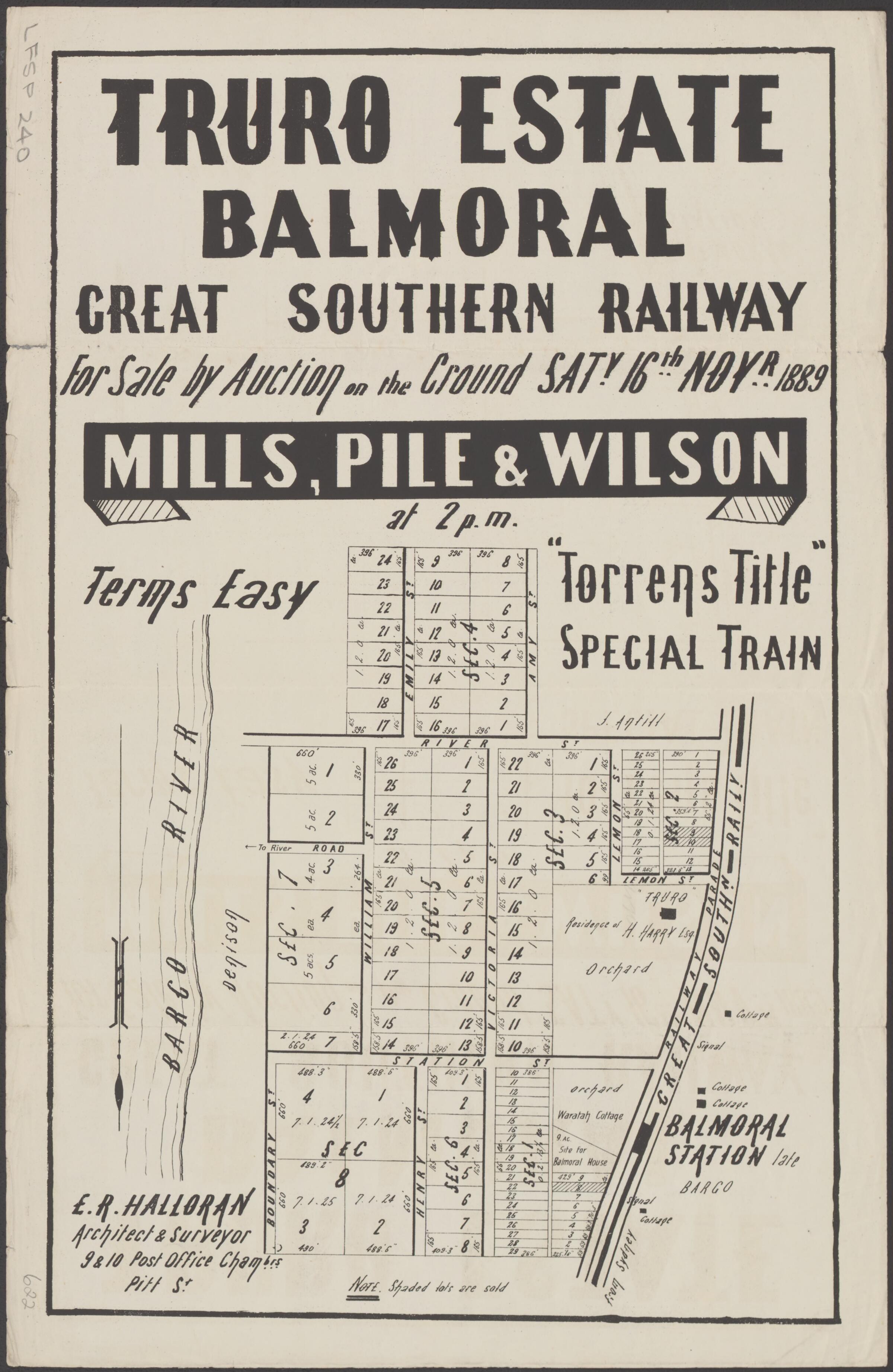
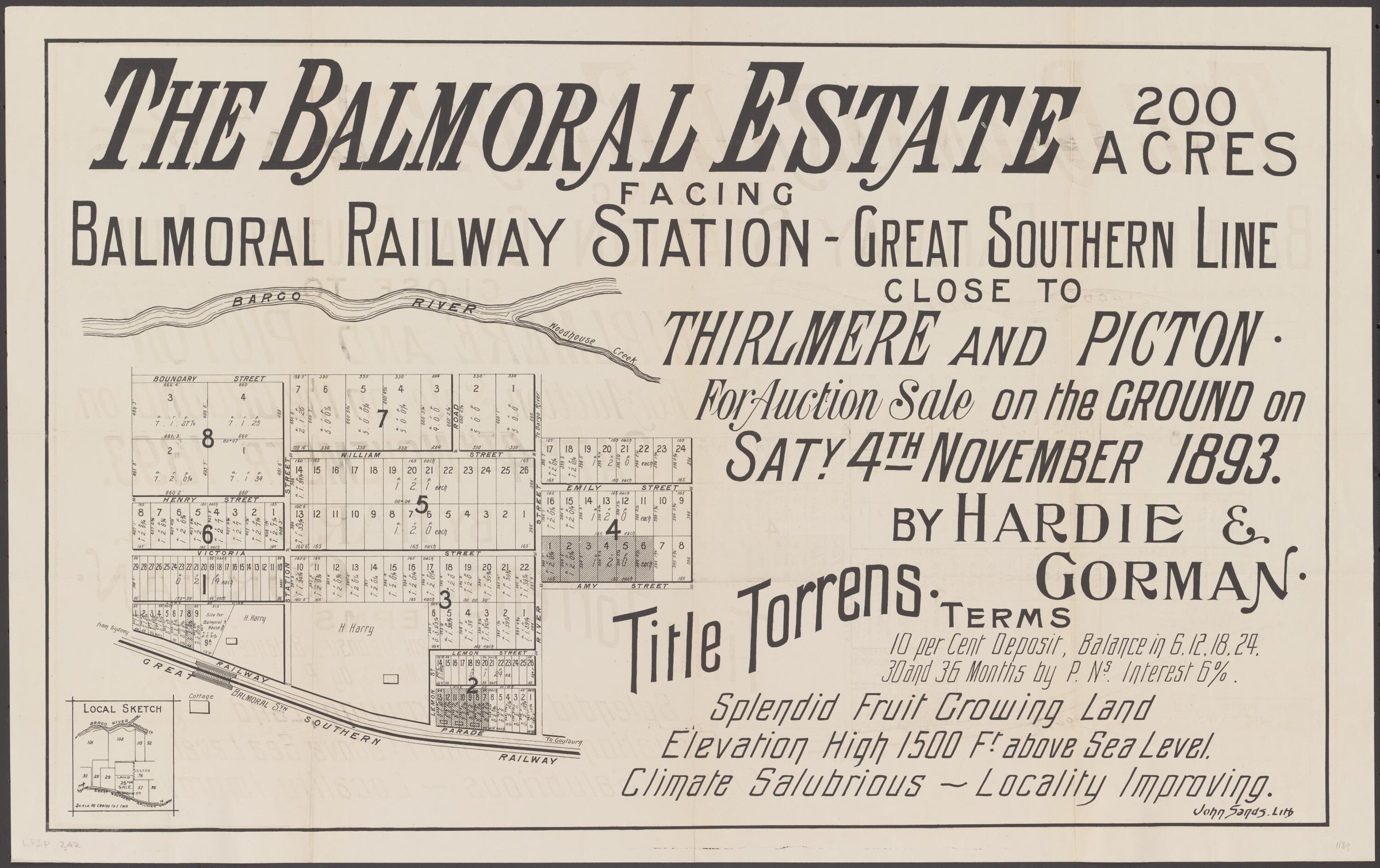
The Truro Estate auction poster advertised lots beside Balmoral station for 16 November 1889, showing the railway, a residence and orchard. It distinguishes shaded lots marked sold from those offered at the auction. The State Library’s subdivision list also identifies Railway Parade, Station Street and neighbouring streets, providing a route into the village’s changing layout; titles and later records are needed to trace individual blocks.[14]
Village association history records twelve houses and 68 people at the 1891 census, and 104 people in 1901. Railway labourers and fettlers were among the inhabitants. The association traces the village hall to a Mechanics Institute and records the present hall as completed in 1939. Its recollections are useful leads for checking census returns, school records and local photographs.[11][12]
The Picton-Mittagong railway opened through the northern district in 1867.[10]
Schools and community
The Old School at 5 Railway Parade is a reminder of village life beyond the railway. The Council heritage survey dates the brick-and-timber building to 1893 and records its later adaptation as a residence. Its early Federation character remains part of Balmoral’s built history.[7]
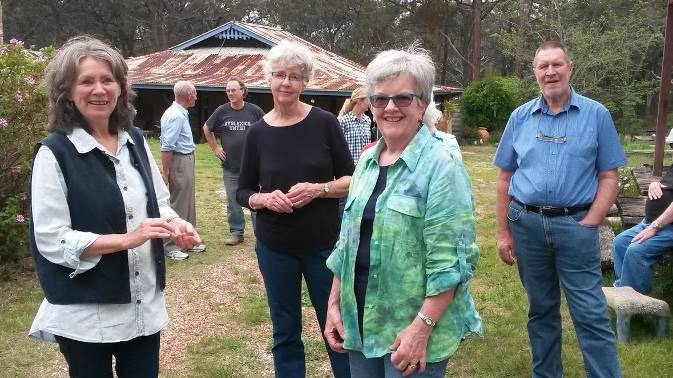
In 2016 a Society tour visited the former school, then a private home. Visitors were fascinated to see how much of the old classroom layout remained. The day also brought the group to Balmoral Hall, where village association members welcomed them for lunch-a meeting of the people who care for the village’s past and present.[8][13]
Related historical names and search terms: Balmoral Village. These may name a former settlement, institution or nearby feature; check the context in the sources.
Historic maps and plans
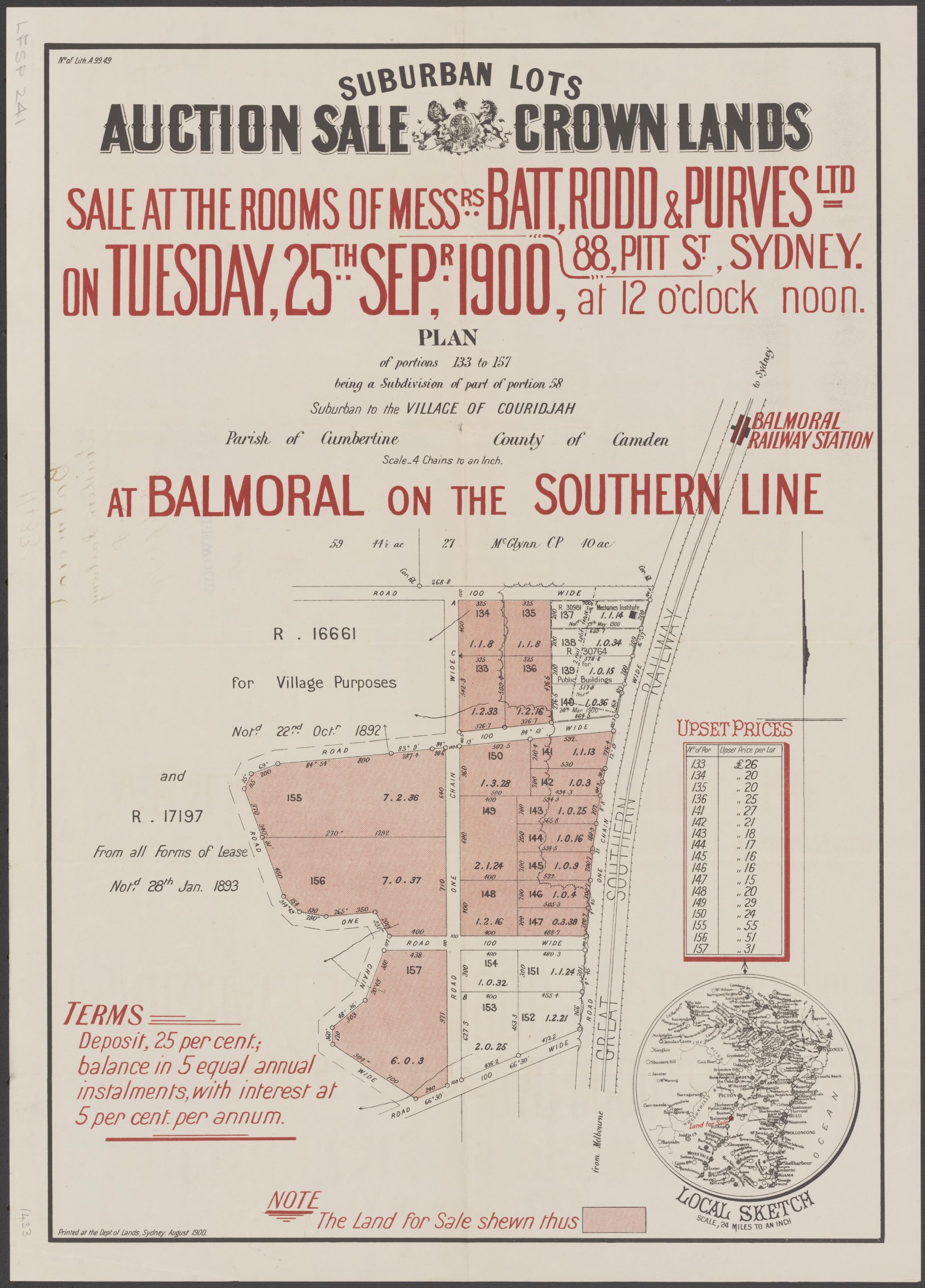
Explore these historic map and subdivision records. Some are catalogue descriptions rather than images of the original plans.
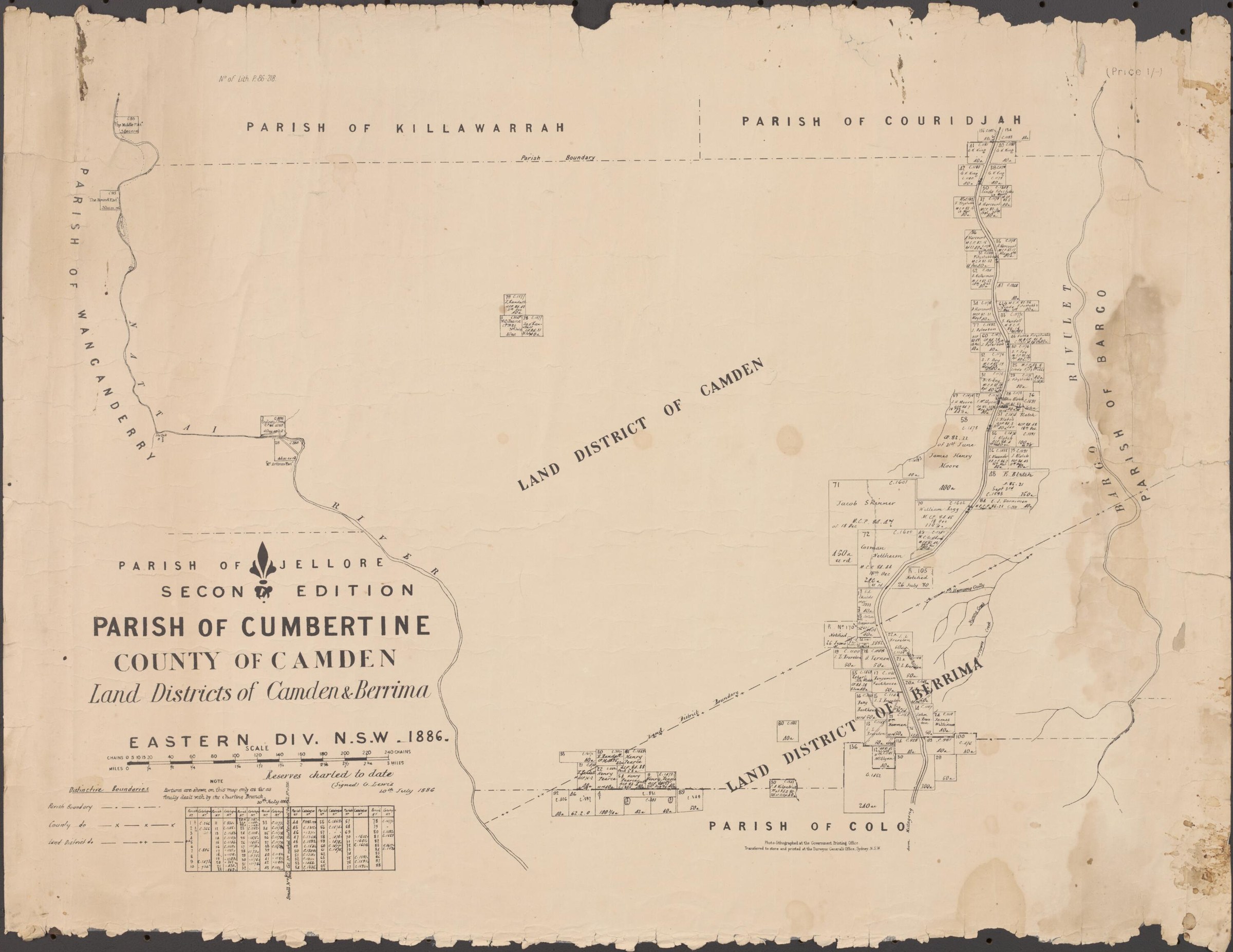
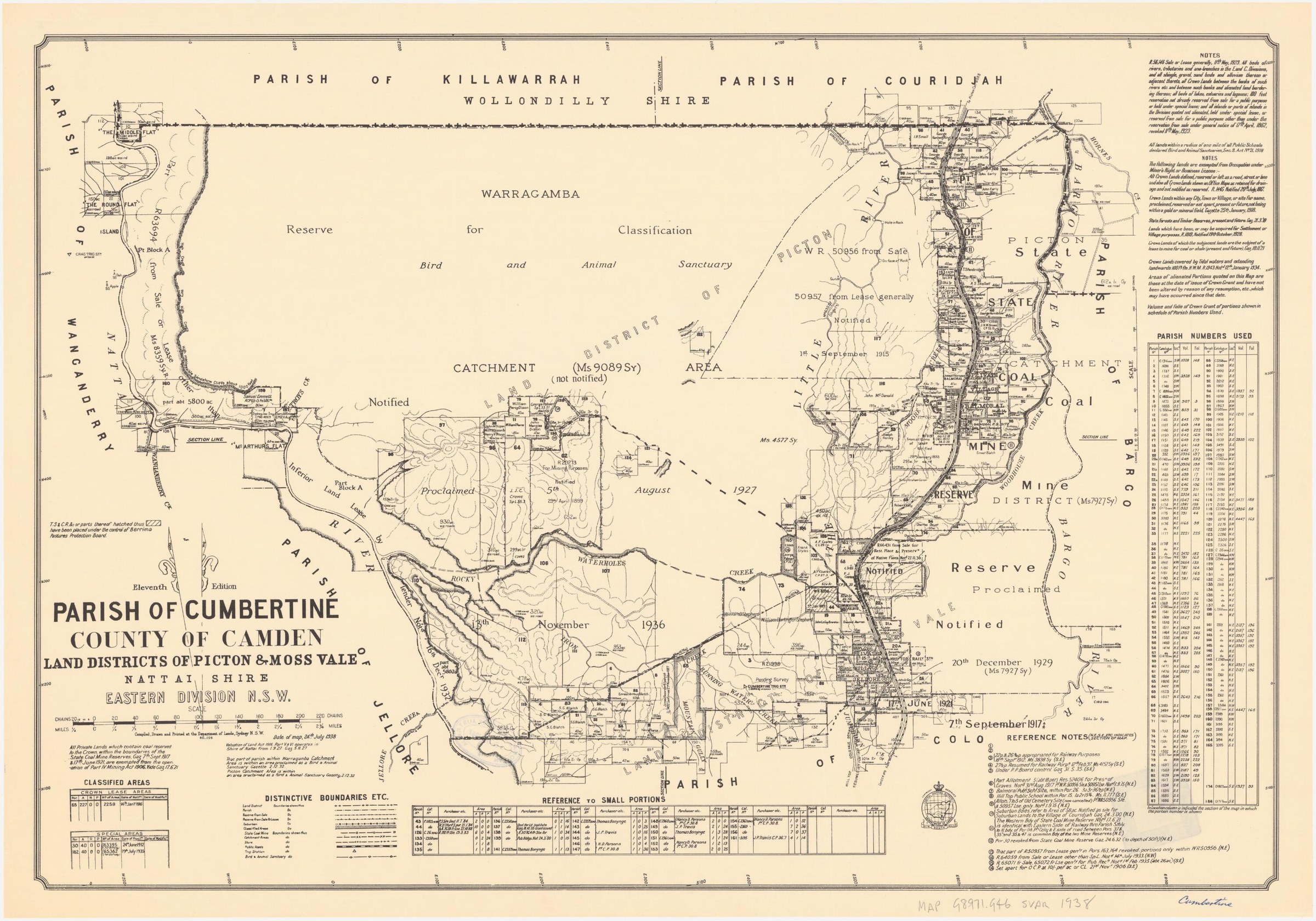
- 1900 diagram: Cumbertine parish map and Balmoral cemetery layout. The heritage study reproduces a parish-map extract incorporating a 1900 diagram of the cemetery and denominational sections, alongside later status charting. The study discusses the 1917 revocation and preservation of graves on the following page. The diagram’s date is not necessarily the publication date of the underlying map.
Browse maps and plans linked to Balmoral
Newsletter Mentions
Stories about Balmoral in the Society’s newsletters.
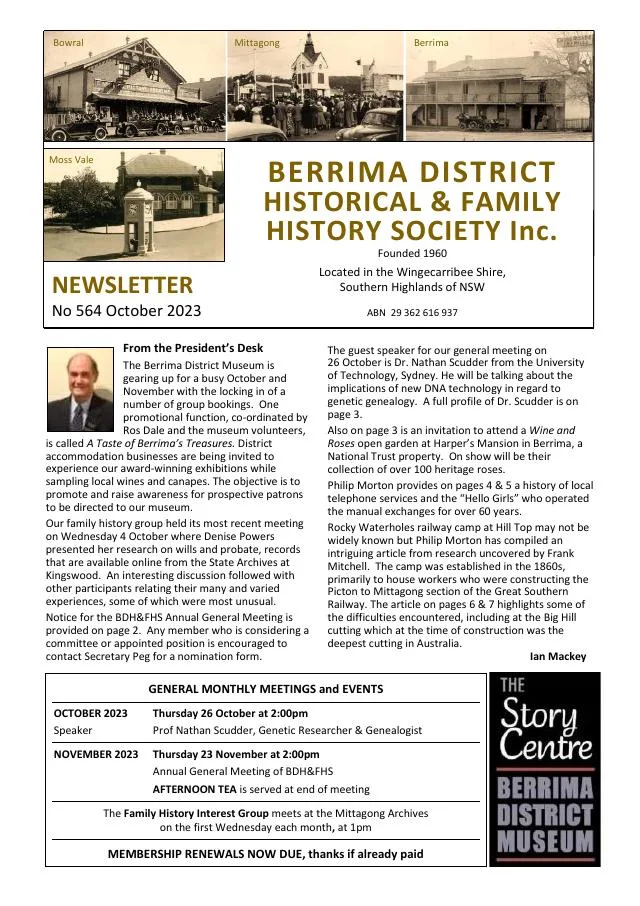
October 2023
- Philip Morton and Frank Mitchell follow the 1860s Rocky Waterholes railway camp and the construction landscape linking Hill Top and Balmoral (pp.6-7).
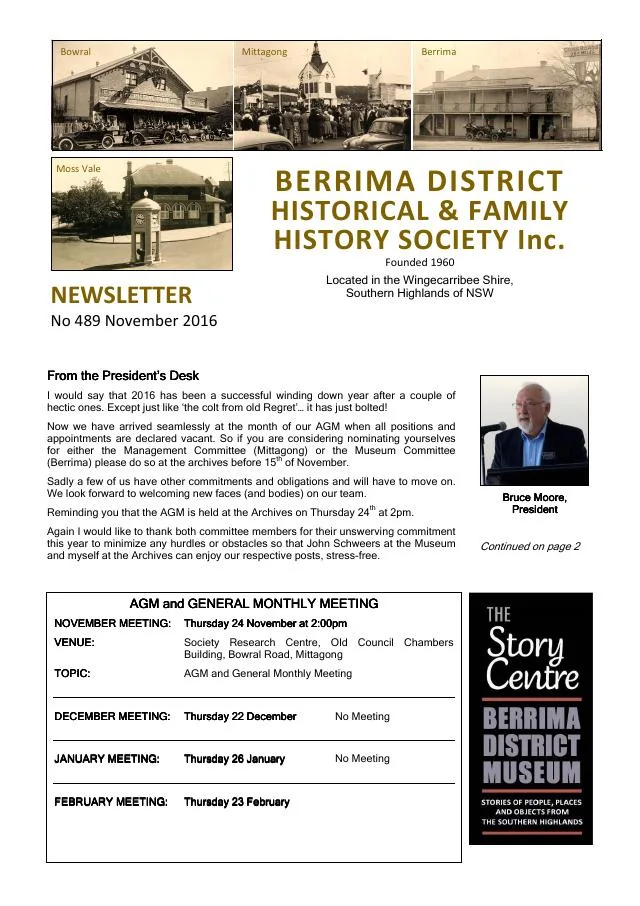
November 2016
- A northern villages tour visits Hill Top, Balmoral and Aylmerton (p.3).
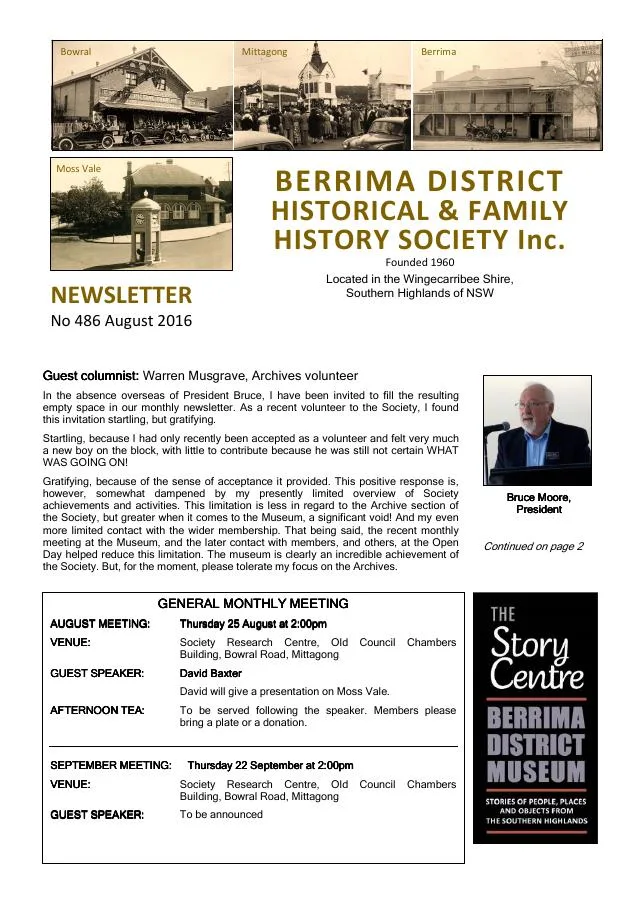
August 2016
- David Baxter’s planned Moss Vale presentation included the 1957 film This is our Town; a proposed tour followed the old railway through Hill Top and Balmoral (p.3).
Books in our Library
These catalogue titles mention Balmoral. Check the linked catalogue and ask the Society about access.
- Electoral Rolls 1903 Balmoral, Bargo, Berrima, Bowral, Bundanoon, Burrawang - catalogue p. 22
Further research
There is more to discover about Balmoral in the Society’s archives and in other collections. A catalogue entry may lead to material that has not been digitised or needs to be consulted in person.
- Ask the Society’s research centre about local files, photographs and records.
- State Library of NSW collections - search photographs, maps, manuscripts and local publications.
- NSW Historical Land Records Viewer - search historical land records, plans and parish maps by place or parcel.
Sources already connected with this place include:
- Wingecarribee Heritage Survey 2009
- Council heritage-study attachments
- State Library of NSW: Bargo and Balmoral subdivision plans
The Society can undertake professional research at $40 per hour. Contact the research centre to discuss your question and request a quote.