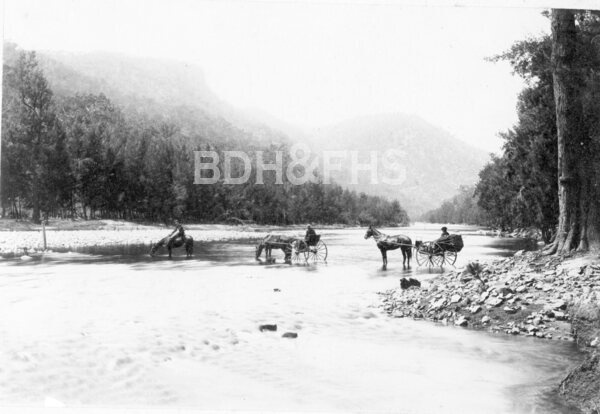
A photograph can reveal a street, building or family detail, but its caption, date and identities should be treated as evidence to investigate rather than automatic proof.
Make a start
Start with a question
Write down the person, place, building or event, possible dates, alternative names and nearby localities. Search the Society’s photo collection and ask its volunteers about unidentified images.
Search several catalogues
Try Trove, the State Library of NSW, the Australian War Memorial for military subjects, and local library or council collections. Search variant spellings, road names, businesses and surrounding towns.
Read the whole record
Record the repository, collection or accession number, title, creator if known, date or date range, original format, caption and stable record URL. A date of digitisation or upload is not necessarily the date of the photograph.
Check the visual clues
Compare signs, street layouts, buildings, clothing and vehicles with dated maps, newspapers and other photographs. Record what is confirmed and what is a hypothesis.
Ask before reuse
Check the item’s copyright statement, licence and any cultural or personal restrictions. Contact the holder or rights owner when necessary; access to an image does not automatically permit publication.
Keep the original and its context
Save a link to the full catalogue record, not just the image file. Note any changes made to a working copy, such as cropping or colour adjustment, and keep an unaltered reference when permitted.
Metadata can record the title, description, creator and source in a display file. It is useful for handover but does not itself transfer copyright or verify the identification.
People and cultural sensitivity
Discuss uncertain identifications with family or community members where appropriate. Respect requests concerning private or culturally sensitive material, including images of deceased Aboriginal and Torres Strait Islander people. A historical caption may contain inaccurate or offensive terms; explain its context without presenting those terms as current fact.
A local research trail: Bundanoon photographs
Bud and Maureen Townsing combined local history and photography to explore Bundanoon’s past. The Society’s tribute describes their research into William Augustus “Gus” Nicholas, an early NSW stereoscopic photographer who moved to Bundanoon in 1872, and their photographic and historical account of the town’s shopping precinct. Their publications bring together images and the research behind them.
Look for the Townsings’ work in the Society’s library catalogue and ask the research centre about the photographs, publications and other source material. Record the image’s original caption and collection reference, then compare the scene with dated maps and newspapers to trace how a street changed.
When a family identifies a face
A wedding photograph in the Society’s image library shows John and Emma Benbow and their wedding party in 1924. One guest had remained unidentified until Susan Small, whose grandmother kept a copy of the photograph, identified her as Connie Bunt, a niece of the bride. A name supplied by someone who knows the photograph can turn an unidentified face into a new avenue of research and help the collection tell a fuller story.
See the photograph and the Society’s account
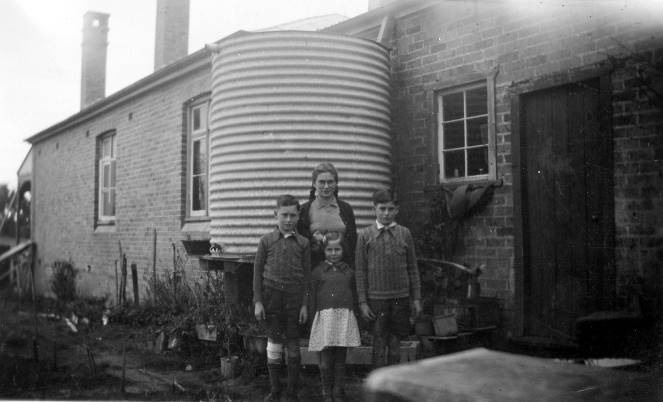
At Aylmerton, Colin McFarlane shared family photographs for the Society to scan. With local historian Tim McCartney, he helped identify the people, places and dates in thirty images, connecting family life with the school, post office and surrounding district. Bring the original image or a good scan, any writing on the back, and the names or dates your family already knows.
Explore the McFarlane family photographs
Useful resources
- Trove - Notices, reports, advertisements, people and place context.
- Wingecarribee Public Libraries Local Studies - Local newspapers, photos, rate books, cemetery registers and council material.
- Australian War Memorial collections - Service, unit, photograph, diary and nominal-roll research.
- State Library of NSW Pictures Collections - Historic photographs, artworks, landscapes and documentary images.
- Society photograph collection
- Explore photographs by town
Explore the full research resource directory · Search the Society library catalogue · Browse Society newsletters
Let the Society help with your research
The Society can undertake professional research at $40 per hour. Tell us what you would like to discover, what you already know and any records you have checked. Contact the research centre to discuss your question and request a quote before work begins.
Email [email protected] or call (02) 4872 2169.
Common questions
Does a library owning a photograph mean it owns copyright?
Not necessarily. A collection can hold an item while copyright belongs to someone else. Check the individual record and contact the holding institution if reuse rights are unclear.
Can a photograph prove when a house was built?
It may show that a building existed by the date of the photograph, if both identification and date are reliable. It does not by itself prove the construction date.
Can the Society help identify a picture?
Contact its research centre with a copy or link, what is known, and the evidence behind any proposed identification. Do not send originals without arranging it first.