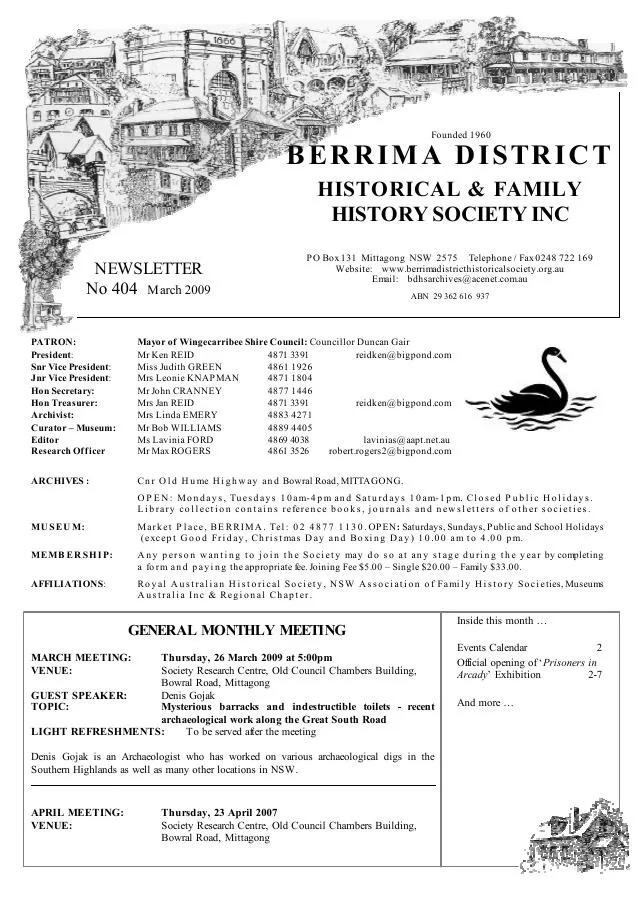
Contents
- March meeting and contents - page 1Introduces a talk on archaeology along the Great South Road and coverage of the Berrima internment exhibition.
- Exhibition opening - page 2Gloria Williams reports the 2009 opening of Prisoners in Arcady; Jenny Simons acknowledges the work behind the book.
- Exhibition and research beginnings - page 3Ken Reid describes the recovered canoe and museum exhibition; John Simons begins an account of his research.
- Finding the internees’ stories - page 4Simons describes photographs, theatrical material, Jack Schott’s memories and contact with internee families.
- Internee diaries and family records - page 5Simons traces the arrival of family papers and diaries, including the Hurtzig family’s account, and credits exhibition curator Lyn Hall.
- German consul-general’s address - page 6The address reflects on wartime confinement, remembrance and the historical exhibition.
- Opening addresses continued - page 7The consul-general’s address concludes and Mayor Duncan Gair discusses the exhibition and its supporters.
- Diary and supporters - page 8Lists Society events and newsletter supporters in 2009.
Issue highlights
- The issue records the official opening of the museum’s Prisoners in Arcady exhibition about the First World War internment camp at Berrima (pp.2-7).
- Ken Reid recounts the discovery and recovery of an internee canoe from the Wingecarribee River in 1978 and the development of the exhibition (p.3).
- In a speech read by Frances Simons, historian John Simons explains how photographs, theatrical playbills and Jack Schott’s recollections helped identify individual internees and their families (pp.3-4).
- Simons describes family reminiscences, annotated photographs, diaries and records that contributed to his research, and acknowledges exhibition curator Lyn Hall (pp.4-5).
- The German Consul-General and the Wingecarribee mayor discuss the exhibition, wartime internment and the work of the museum’s volunteers (pp.6-7).
Original Society source
Explore places in this issue
Follow places named in the contents into their local histories.
Keep exploring