Good family history is a chain of cited evidence. Begin with what your family can safely share, then test each relationship and event against records created close to the time.
Start exploring: NSW birth, death and marriage index guide · Search Trove newspapers · Society library catalogue · Visit the research centre
Make a start
Start at home
Record names, dates, places, family papers and who supplied each detail. Ask permission before sharing living people’s information.
Work backwards
Search one person and one event at a time. Record spelling variants, witnesses and informants as well as the headline name.
Test the clue
Use indexes and online trees to find leads, then seek certificates, registers, archival images or contemporaneous notices.
Cite and revisit
Keep a research log with a URL or archive reference, access date, transcription and unresolved questions.
Separate clues from proof
A user tree, an index entry or an OCR newspaper result can be a valuable clue, but it is not automatically proof. Compare independent sources and note conflicts instead of forcing a conclusion.
For NSW civil events, begin with the historical index, preserve the registration reference, and decide whether a certificate is needed for the question at hand.
Find the key events
Begin with a known relative and build a timeline of births, marriages, deaths and places. Search the free NSW historical births, deaths and marriages index using alternate spellings, given names and districts. Try an asterisk as a wildcard-for example, Ann* can find Anne and Annie-and widen the date range if a search draws a blank. For a marriage, one surname is enough to begin; for an unnamed birth, try the surname, parents’ names and date range.
The historical index generally opens births over 100 years ago, marriages over 50 years ago and deaths over 30 years ago; new records become available daily. Keep the registration number and compare the details in an official certificate or a transcription when you need to resolve a relationship. Earlier church records can contain less detail, and certificates can include mistakes or gaps. Fees and access conditions depend on the record and service.
Search Trove newspapers for family notices, obituaries, inquests, weddings, advertisements and ordinary community life. Try a full name in quotation marks, initials, maiden names and an address; narrow by date and newspaper, and inspect the page image because machine-read text can miss or misread names.
Follow a person through their community
Search the National Archives RecordSearch for military service, immigration and other Commonwealth records. Use a service number, birth date or place to distinguish people with similar names; many First World War service files can be viewed online. Museums of History NSW holds state archives and guides to immigration, convicts, schools, probate and other records.
FamilySearch and subscription services such as Ancestry and Findmypast can help locate indexes, digitised records and other researchers’ trees. Access varies by collection: ask a library about on-site database access, and verify relationships against the underlying records. For Aboriginal and Torres Strait Islander family research, AIATSIS offers specialist guidance on records, access and community connections.
Visit the archives and follow local clues
Bring your question, a simple family tree, names and variants, approximate dates, places and copies or references for what you have already found. At the Society’s Max Rogers Research Library and archives in Moss Vale, ask about local family files, cemetery and school indexes, newspapers, published histories, photographs and other material relevant to the district. Search the library catalogue and Society newsletters before your visit.
Wingecarribee Public Libraries’ Local Studies collection can provide another route into local newspapers, photographs and histories. Cemetery registers, church records and local historical societies may help bridge gaps in civil records; check their access arrangements and ask what survives for your period.
Ask for a local family file
The Society lists biography files for hundreds of local families, containing material such as family information, press cuttings and photographs. Ask staff to check the family name and its variants, and record the file reference and the original source of each useful item. A compiled file is a starting point: compare its claims with the records it cites.
For a person who lived locally, ask about cemetery transcriptions, church records and local newspaper holdings. The Society lists titles including the Bowral Free Press, Mittagong Star, Moss Vale Post and Robertson Advocate, in hard copy or on microfilm. Ask which years and formats survive before visiting; a notice may give an address or relatives to follow up.
A local trail: the Fleeton family
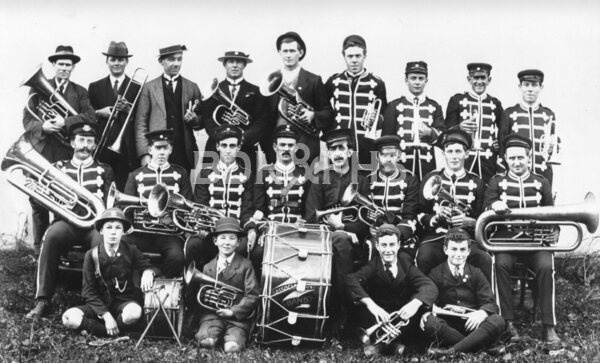
A photograph donated to the Society shows members of the Fleeton family in Moss Vale around 1900. The Society’s 2013 newsletter describes the family’s connections to the district and records descendants visiting the archives to research their history. One image can become the starting point for a conversation across generations.
Begin with the names, location and approximate date recorded with the photograph. Search for the family in the Society’s biography files and library, then compare the published account with marriage, death, newspaper and other original records. Keep the image’s source and any uncertain identifications with your notes.
A worked example
This example is fictional and illustrates a research method, not a real historical finding.
Was the person in this marriage index our ancestor?
Suppose a family paper says Alice Brown married in the Southern Highlands around 1900. Search the NSW historical marriage index for likely names and variants, recording the registration number and district for each candidate.
Compare a suitable certificate with independently known details such as parents, occupation or residence. A matching name and district alone do not establish identity. Record any conflicting evidence and keep the source reference with the conclusion.
Learn alongside other researchers
The Society’s Family History Group gives members a friendly place to share discoveries and work through difficult questions. Past meetings have explored sources such as Trove and shipping records, as well as photographs and writing family stories.
The group grew out of a family history seminar at the archives in 2017. Members formed an informal group to meet monthly, compare approaches and help one another through the difficult questions that every researcher encounters. Maxine Gray initially coordinated it.
Read the Society’s 2017 archives report
See upcoming Society meetings · About the Family History Group
Useful resources
- Ancestry - Australian, UK and US records, user-tree clues and DNA matches.
- FamilySearch Historical Records and Family Tree - Worldwide indexes, images and unindexed image collections.
- Findmypast - UK, Irish and Commonwealth records, newspapers, migration and military.
- WikiTree - Sourced deep ancestry and collaborative DNA projects.
- Trove - Notices, reports, advertisements, people and place context.
- National Archives of Australia RecordSearch/NameSearch - Migration, naturalisation, defence and Commonwealth records.
- Museums of History NSW / State Archives family-history guide - Convicts, assisted immigrants, probate, schools, land and NSW government records.
- NSW Registry of Births, Deaths & Marriages - NSW births, marriages, deaths and pre-1856 church records.
- Wingecarribee Public Libraries Local Studies - Local newspapers, photos, rate books, cemetery registers and council material.
- Australian War Memorial collections - Service, unit, photograph, diary and nominal-roll research.
- AIATSIS Family History - Aboriginal and Torres Strait Islander family history, finding records and specialist support.
Explore the full research resource directory · Search the Society library catalogue · Browse Society newsletters
Let the Society help with your research
The Society can undertake professional research at $40 per hour. Tell us what you would like to discover, what you already know and any records you have checked. Contact the research centre to discuss your question and request a quote before work begins.
Email [email protected] or call (02) 4872 2169.
Common questions
Can I copy an online family tree?
Use it as a lead. Check its cited evidence and locate original or archival records before relying on it.
What should I write down?
Record the exact source, date accessed, identity of the person searched, spelling used and what the result does-and does not-show.