Discover Bargo
A Wollondilly town on the southern road and railway, connected with Yanderra and the northern Highlands.
Explore nearby and connected places: Yanderra · Yerrinbool · Buxton · Mittagong
Bargo through time
Early land and railway
Bargo lies north of Yanderra in Wollondilly Shire. Its land and travel history extends well beyond the town’s railway era and must be read alongside the continuing histories of Aboriginal people whose country includes this district.[5]
The Great Southern Road carried travellers through West Bargo before a railway served the town. Wollondilly’s heritage assessment traces local land grants to 1822, when many holdings were small farms. The road helped shape the early settlement and brought traffic through the surrounding bush.[5]
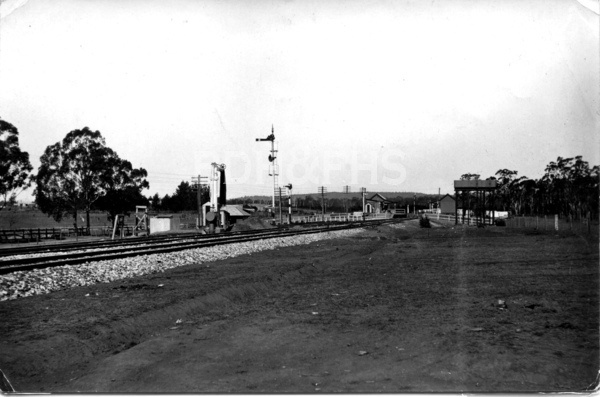
A Wollondilly heritage assessment records early land grants in West Bargo from 1822 and notes that the original railway to Mittagong bypassed Bargo. The Picton-Mittagong deviation opened in 1919, connecting the area to the main southern route. The station was first known as West Bargo and was renamed Bargo in 1921, according to the railway history cited in a heritage assessment.[5][6]
The original railway bypassed Bargo in 1867. The Council assessment describes the loss of traffic and local decline that followed, including the closure of the school and a period without a post office. A new Picton-Mittagong route eventually brought the main line through Bargo in 1919, changing the town’s connection to the wider district.[5][6]
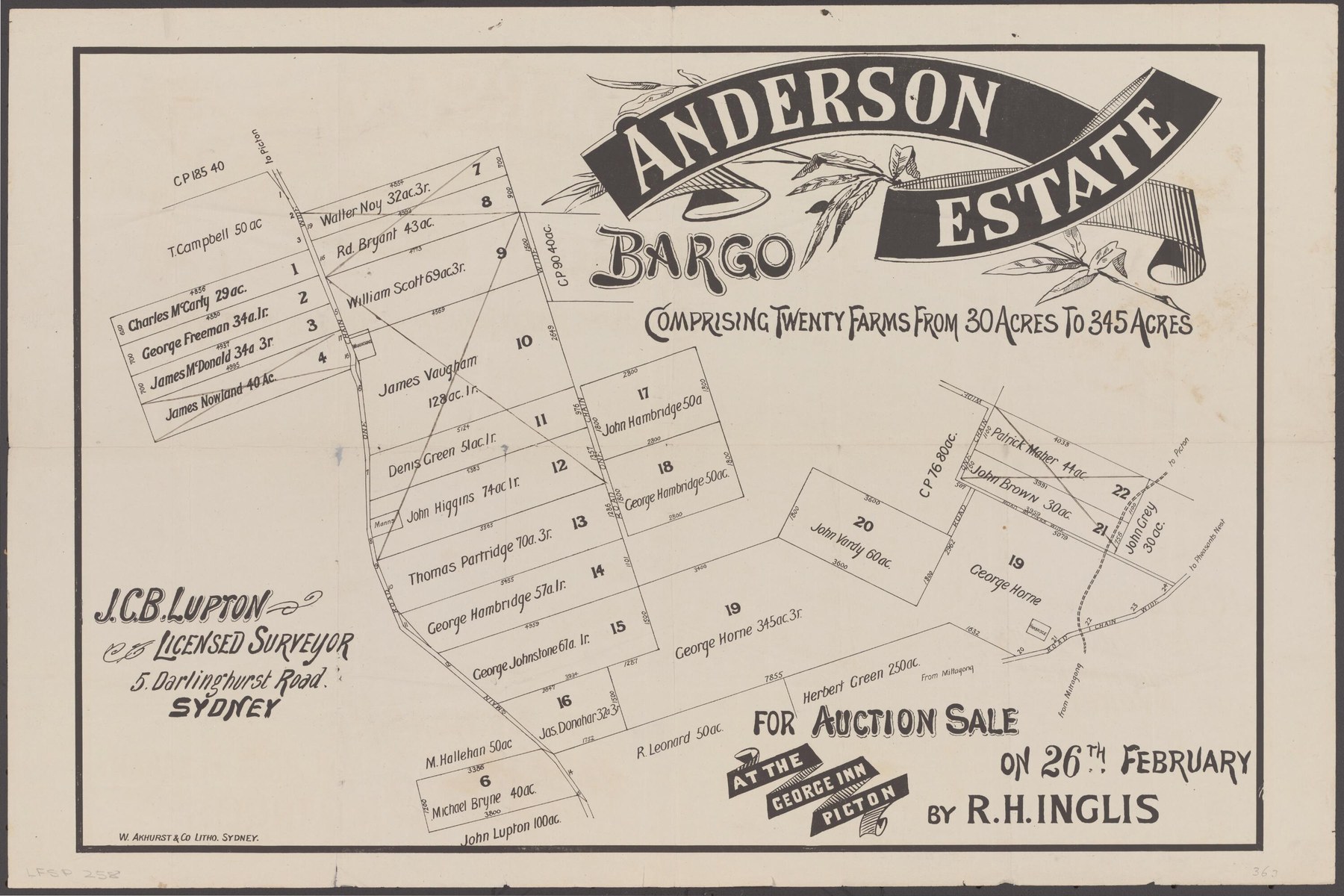
The Anderson Estate auction poster offers a view of rural subdivision before Bargo’s 1919 railway deviation. It advertises twenty farms, ranging from 30 to 345 acres, and shows numbered blocks, personal names and roads towards Picton and Mittagong. The poster gives 26 February but no year. A Sydney Morning Herald notice identifies an Anderson estate auction by the same auctioneer at the George Inn, Picton, on 26 February 1887, giving strong evidence for the date. The labels and proposed lots are a starting point for checking original surveys, ownership and sales.[14][15]
The Hawthorne Estate was offered at auction on 10 November 1917, before the Picton-Mittagong deviation opened. Arthur Rickard & Co’s sale plan advertised Bargo station on the proposed route; the State Library’s subdivision list identifies Hawthorne, Bargo, Johnston and Government roads on the plan. The offering is evidence of the developer’s proposed layout, not proof that every block sold or was built upon.[11][7]
Subdivision and town life
The State Library lists subdivision plans including the Heart of Bargo Estate, advertised in 1924, with streets such as Railside Avenue and Radnor Road. These plans are valuable evidence of land marketing and street layout, but do not by themselves establish when individual buildings were constructed or occupied.[7]
The same December 1924 council report discussed roads in the Heart of Bargo subdivision. The engineer noted concerns about clearing but recommended accepting the work and taking over the roads, which the report says was adopted. This provides a contemporary record of infrastructure associated with the subdivision, alongside its sale plans.[12]
A Sydney newspaper reported that Arthur Rickard & Co sold 41 lots at Avonweir Estate, West Bargo, in October 1919, including farmlets and town sites. The report offers evidence of the early land market after the railway deviation; its sales figures and descriptions should be compared with the original estate plan and conveyances for individual blocks.[13]
Council’s centre study identifies a range of local heritage items including the post office, hotel, public school, former school residence and railway structures. Wollondilly Library lists a pictorial history of Bargo Public School, while Picton and District Historical and Family History Society holds records for Bargo and neighbouring communities.[8][9][10]
Related historical names and search terms: West Bargo. These may name a former settlement, institution or nearby feature; check the context in the sources.
Browse local photographs linked to Bargo
Explore the Society’s photographs for sale
Browse maps and plans linked to Bargo
Newsletter Mentions
Stories about Bargo in the Society’s newsletters.
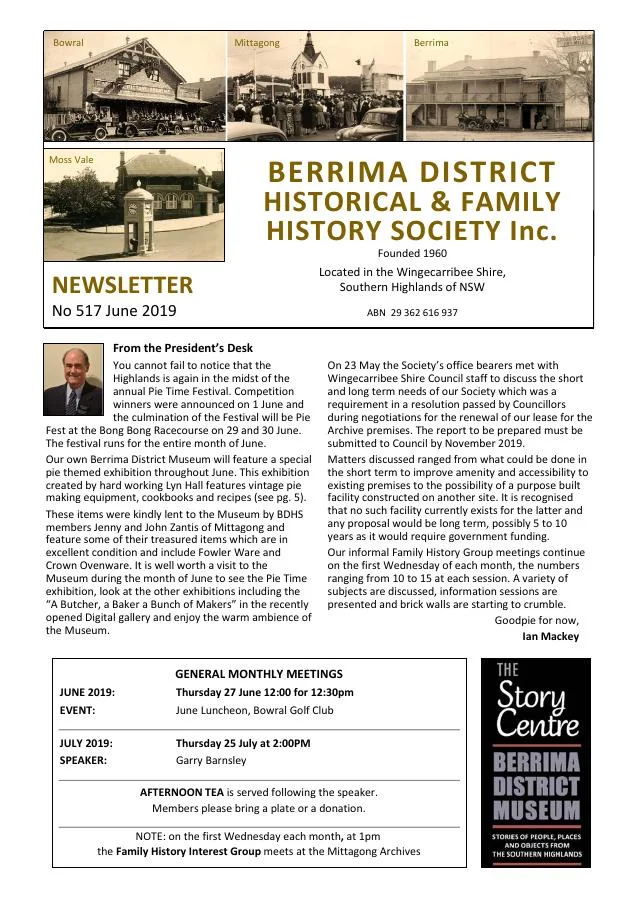
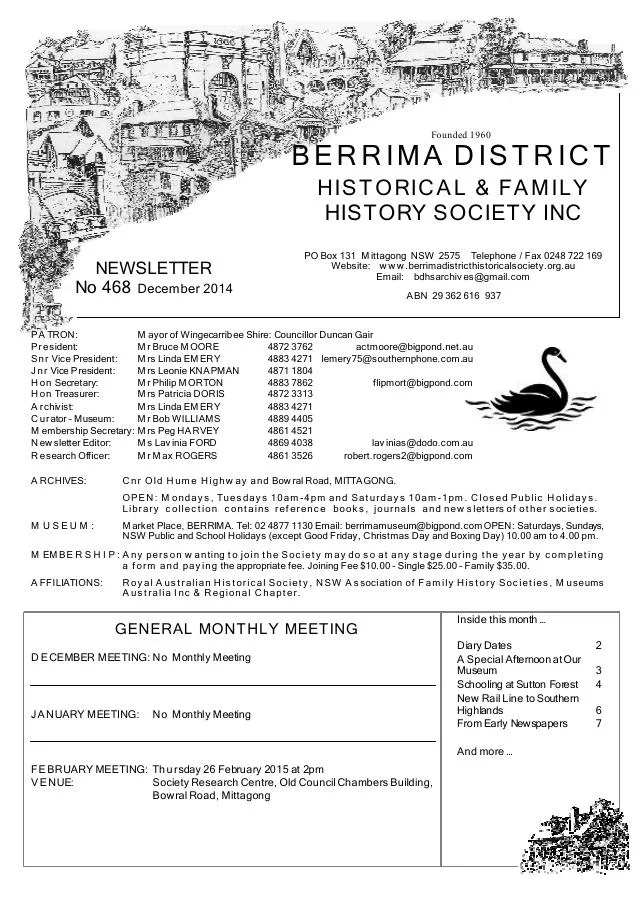
December 2014
- The issue explains the 1914 approval of the Picton-Mittagong railway deviation and its opening via Bargo in 1919 (p.6).
Books in our Library
These catalogue titles mention Bargo. Check the linked catalogue and ask the Society about access.
- Bargo Cemetery Memorials. A Pictorial Record to December 2009. Published by Picton and District Historical Society. (2009) - catalogue p. 12
- Electoral Rolls 1903 Balmoral, Bargo, Berrima, Bowral, Bundanoon, Burrawang - catalogue p. 22
Further research
There is more to discover about Bargo in the Society’s archives and in other collections. A catalogue entry may lead to material that has not been digitised or needs to be consulted in person.
- Ask the Society’s research centre about local files, photographs and records.
- State Library of NSW collections - search photographs, maps, manuscripts and local publications.
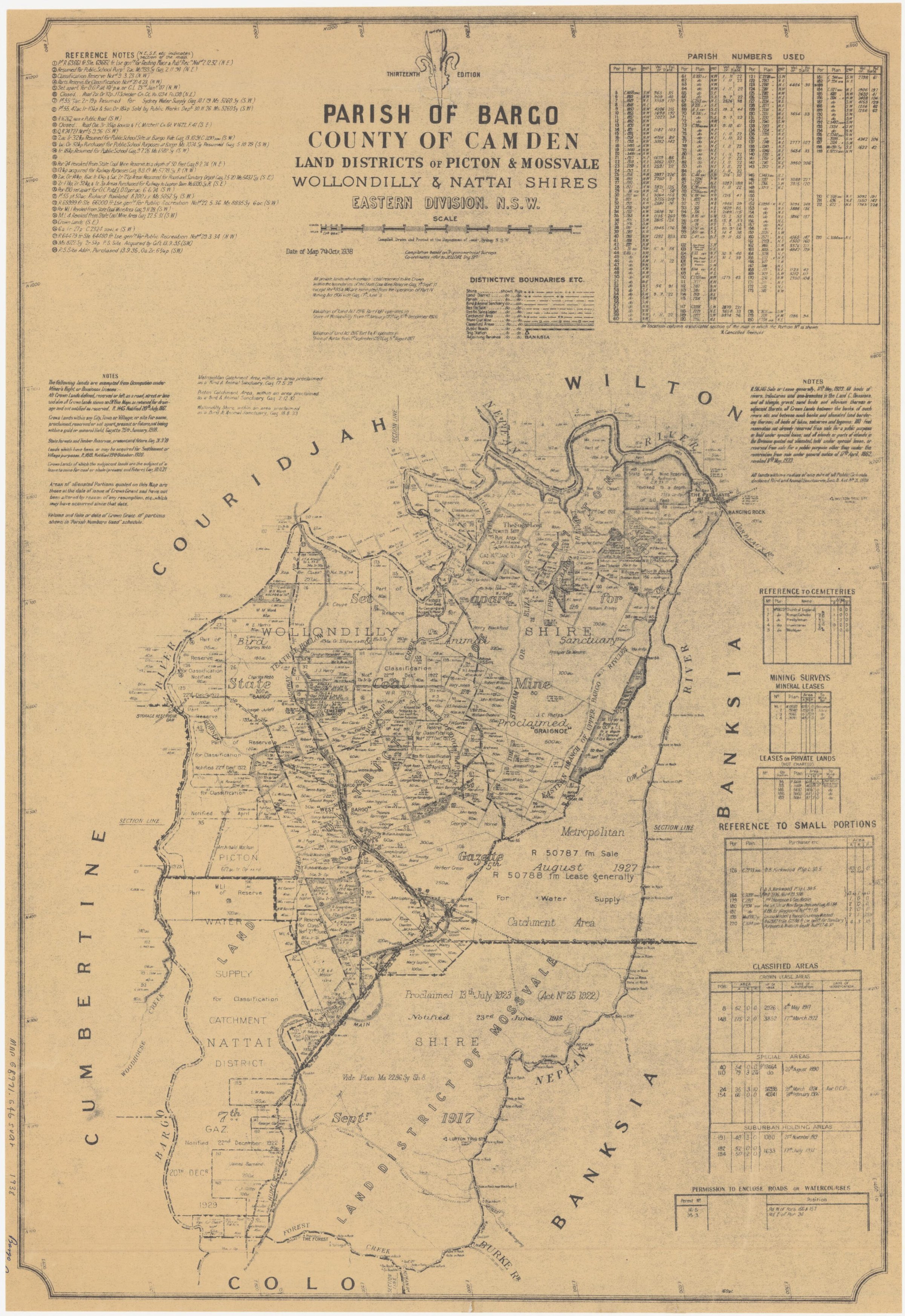
- NSW Historical Land Records Viewer - search historical land records, plans and parish maps by place or parcel.
Sources already connected with this place include:
- Wollondilly: Bargo historic heritage assessment
- State Library of NSW: Bargo subdivision plans
- Wollondilly Council: Bargo centre study and heritage items
- Wollondilly Library: towns within the shire
The Society can undertake professional research at $40 per hour. Contact the research centre to discuss your question and request a quote.