Discover Burrawang
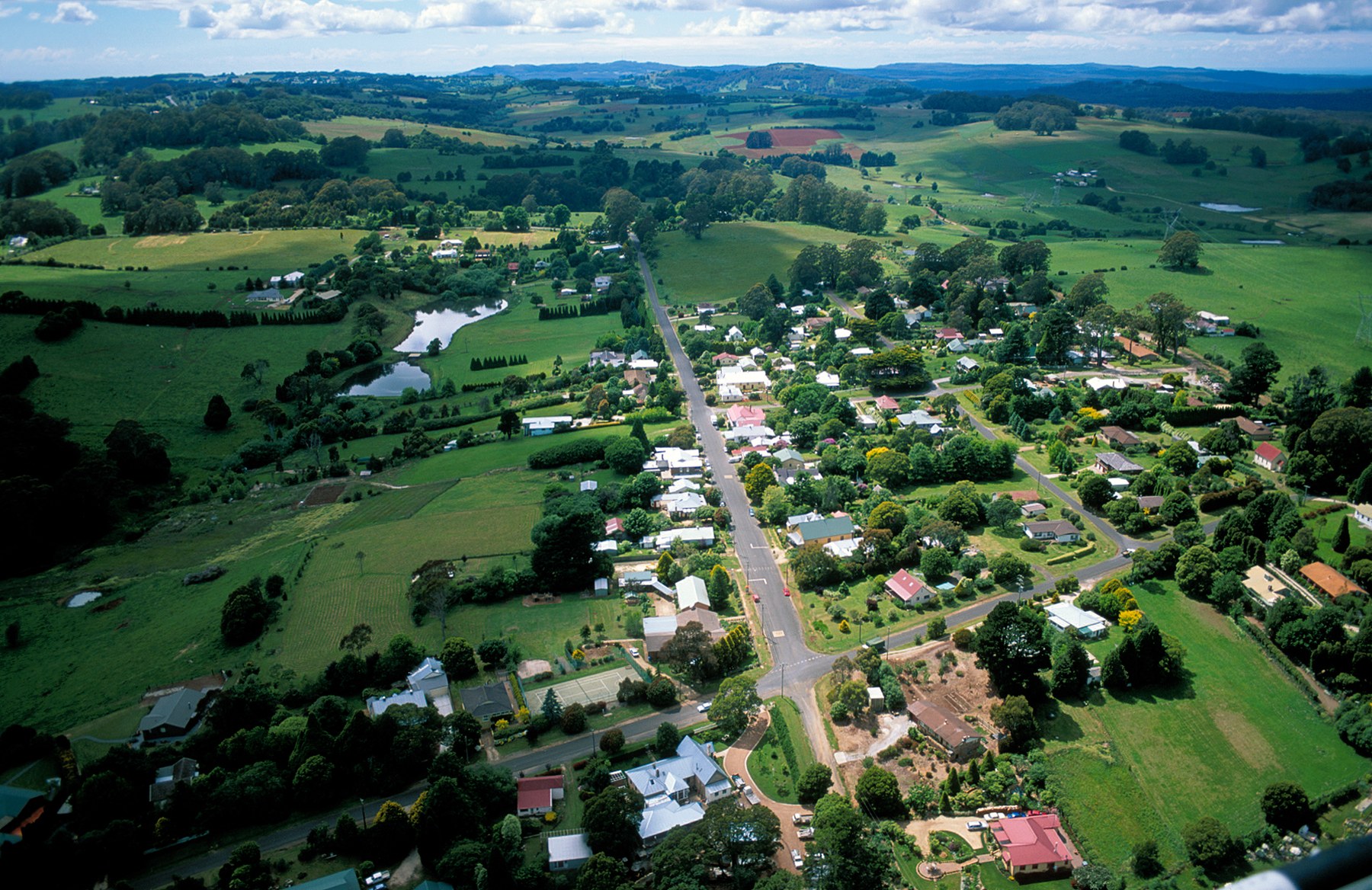
Burrawang grew among the farms of the Yarrawa Brush, where an inn, store, post office and church served a scattered rural community.

Explore nearby and connected places: Robertson · Avoca · Wildes Meadow
Burrawang through time
Selectors and a village in the Brush
The Society’s account of the Cullen family places the first selections south of Wingecarribee Swamp in 1862. John Cullen was among the early selectors; he and his brother James later became hotel licensees and owners at Burrawang and Moss Vale, and both served on Moss Vale Municipal Council. The newsletter credits family records, the Society’s biography files and newspaper research as sources for this family history.[13]
The Cullen family’s hotel interests were linked to the roads beyond the village. The Society’s family history records that Cullen and Haddin won an 1886 mail contract from Moss Vale to Nowra, travelling through Yarrunga, Barrengarry, Kangaroo Valley and Cambewarra. The service joined the railway town with farms, inns and communities towards the coast.[27]
A photograph of Daniel Mumberson, taken in 1915, introduces another family in the Society’s collection. The newsletter records that Daniel, Barbara and their children came from Keswick to Australia in 1853, lived at Kiama, and moved to Burrawang in the 1860s. While building a home, Daniel and two sons earned a living cutting shingles and pit-sawing timber; Daniel and Barbara are buried in Burrawang General Cemetery.[18]
A Council heritage survey records that a Church of England denominational school was built in the late 1860s and that St David’s Anglican Church opened on 22 October 1886. The Burrawang and Wildes Meadow Community Association’s historical account dates the post office to 1865, the Sassafras Inn licence to 1866 and the general store to 1867. These early services show a privately developed village serving selectors and farms rather than a government township. Council’s archives also preserve Burrawang/Robertson burial registers, an important source for local families.[10][11][12]
Philip Morton’s account of local policing describes William Barrett buying 50 acres in the early 1870s and subdividing it into town blocks. Barrett and his brother Leonard also operated a steam flour mill and sawmill. This provides a promising lead for tracing the village’s subdivision through surviving plans and land records; the newsletter does not reproduce the sale plan.[16]
Farms, shows and land sales
The Burrawang and West Camden Agricultural Society’s first annual show in 1880 linked the village’s farming community with the surrounding district. Philip Morton records that heavy rain made travel difficult and the following show was held at Moss Vale, where John Cullen lent land near the railway station and his public hall for exhibits. The Society later held its show at Robertson; these moves illustrate the practical importance of transport and venues to agricultural gatherings.[17]
Community life also left buildings and records. The Burrawang School of Arts history dates the first Oddfellows Hall to 1883 and the purchase of the hall by the School of Arts to 1903. The community association’s account describes an agricultural club established in 1878 and a show held at Burrawang in 1880. These organisations offer starting points for tracing local farming families and the village’s social life.[14][15]
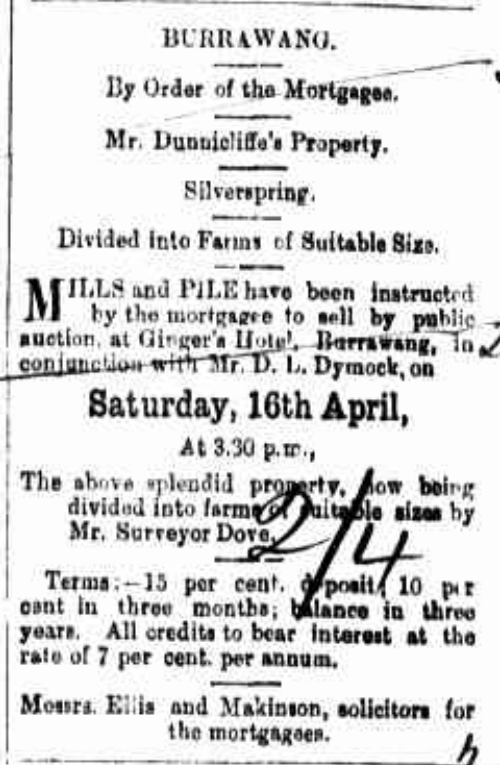
Silverspring was also a working farm before its advertised subdivision. A February 1887 sale notice described A. A. Dunnicliff’s 208-acre seed and stud farm. In April the mortgagee advertised it for auction in farm blocks; in June the Goulburn Herald reported a private purchase of the farm by the Barrett brothers. The 1887 sale plan and the Barretts’ 1889 town-allotment advertisement can be studied together, but their precise boundaries require further comparison.[24][25][26]
Another sale-plan lead survives in the State Library’s Camden County list: Silverspring, Burrawang, with Wilds Meadows Road identified as a boundary and an auction date of 16 April 1887. The catalogue entry is a useful starting point for locating the actual plan. Its relationship, if any, to the Barrett brothers’ later town subdivision has not been established.[23]
A surviving advertisement brings the Barrett subdivision into focus. For an auction at the Club Hotel on 8 June 1889, Hayter, Graham and Moses advertised 180 town allotments on behalf of the Barrett brothers. The notice described land extending south from the hotel towards the new Church of England building and east from the vendors’ general store towards T. McCollum’s property; it mentioned lithographic plans available in several district centres. A later newspaper correspondent reported that 180 blocks were sold to local purchasers. The advertisement is evidence of the proposed sale and its marketing; the exact boundaries and individual purchasers need the original plan and land records.[21][22]

The police station and the later village
Residents sought their own constable as the village grew. The Society’s account traces a station approved in 1894, initially in a room in the Gardiner family shop, and a move in 1903 to a house in Barrett Street. The station closed in 1920 and the district was supervised from Robertson.[16]
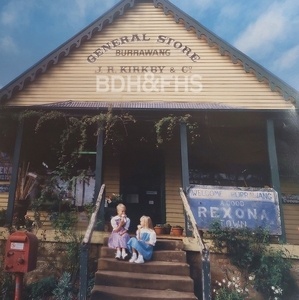
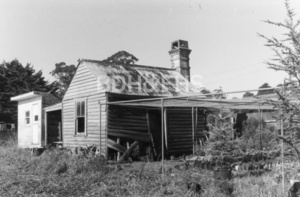
Browse local photographs linked to Burrawang
Explore the Society’s photographs for sale
Read the landscape
1887
Find call number Z/CP/C1/118 in the linked State Library list.
Silverspring, Burrawang: subdivision plan
The library lists a Silverspring, Burrawang subdivision plan dated for auction on 16 April 1887 and identifies Wilds Meadows Road as a boundary. This is a separate catalogue entry from the Barrett brothers’ 1889 auction; the list does not establish that it is the same land.
Related places: Burrawang, Wildes Meadow
State Library of New South Wales, Camden County subdivision plans, Z/CP/C1/118.
The link leads to a catalogue list, not a verified image of the plan; check the individual item and reuse conditions before reproducing it.
1923
Catalogue reference · display image to be added after reuse checks.
Parish of Burrawang and Yarrunga, County of Camden
The State Library’s archival description lists three copies of the sixth edition dated 15 October 1923. It identifies the parishes as Burrawang and Yarrunga. The link is an archival catalogue record; check the library for access to the maps.
Related places: Burrawang, Avoca, Yarrunga
NSW Department of Lands; State Library of New South Wales, Starkey family papers, maps call number Parish map - County Camden - Parish Burrawang (1923).
Check copying conditions with the State Library before reproduction.
Browse maps and plans linked to Burrawang
Newsletter Mentions
Stories about Burrawang in the Society’s newsletters.
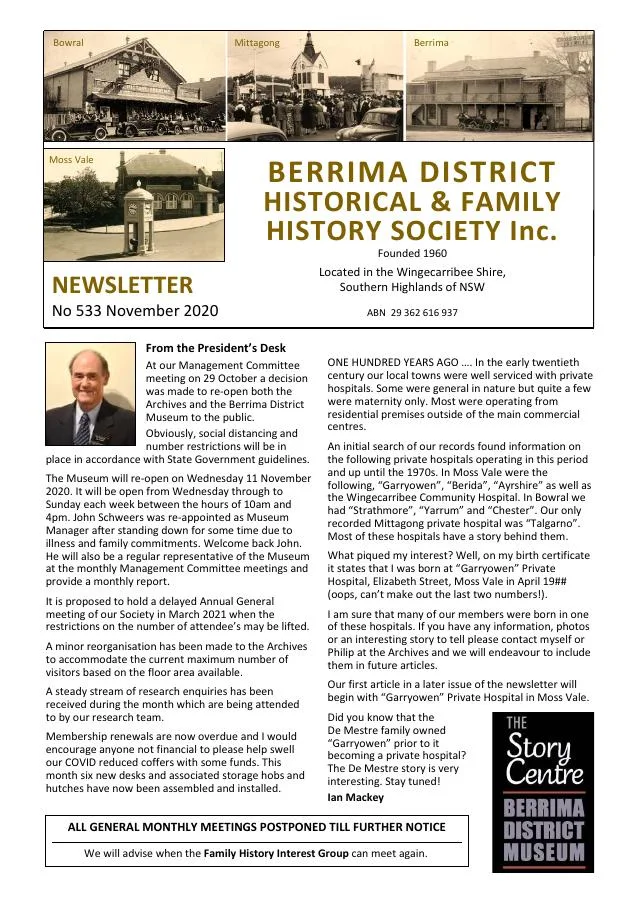
November 2020
- The Society’s annual reports and a Burrawang Cemetery transcription gathering are introduced (p.3).
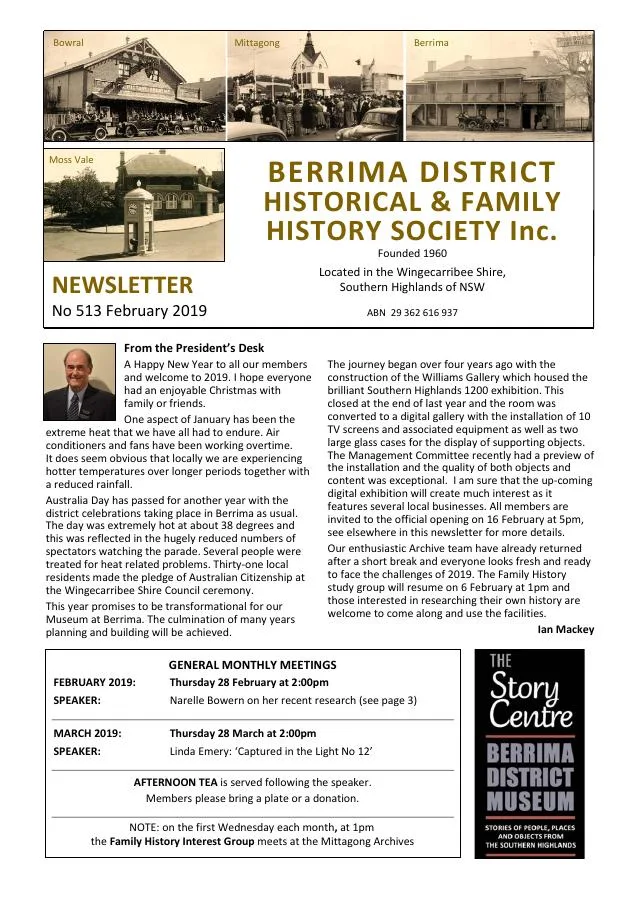
February 2019
- New library books and Society achievement awards precede the continuation of the Cullen family’s Burrawang and Moss Vale history (pp.5-7).
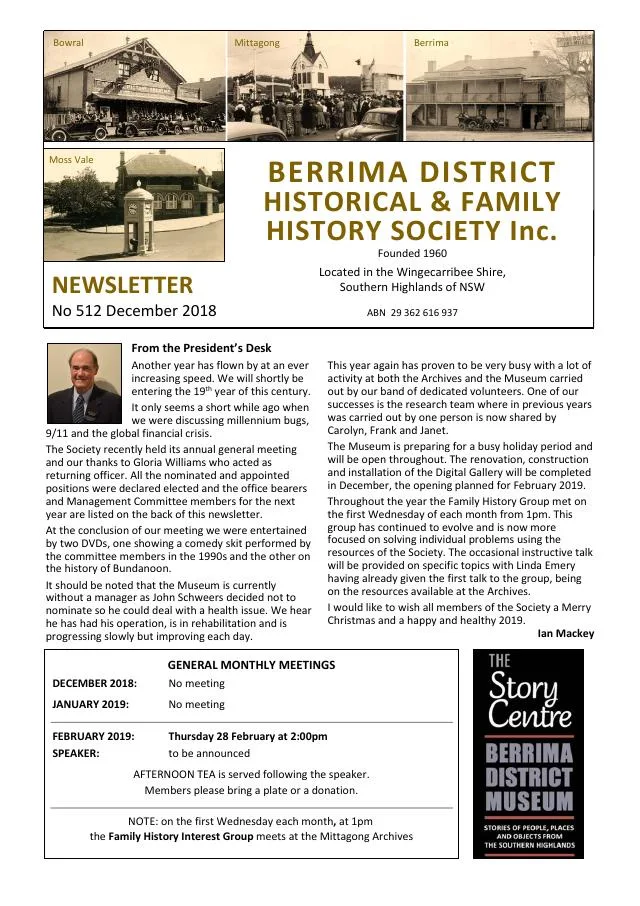
December 2018
- A local history series begins the Cullen family’s story at Burrawang and their hotel businesses at Moss Vale (pp.6-7).
Books in our Library
These catalogue titles mention Burrawang. Check the linked catalogue and ask the Society about access.
- Burrawang and Beyond (1981) - catalogue p. 15
- Electoral Rolls 1903 Balmoral, Bargo, Berrima, Bowral, Bundanoon, Burrawang - catalogue p. 22
- History of the Burrawang School of Arts 1883-2009. (2009) - catalogue p. 32
- Reds and Blacks to Maroon and Whites 1914 - 2024: A 110 year history of Robertson-Burrawang Rugby League. (2024) - catalogue p. 51
- The Burrawang Bunyip (Article in Sydney Water Board Journal, Volume 28 No. 1 June, 1978. Page 1.) (1978) - catalogue p. 60
Further research
There is more to discover about Burrawang in the Society’s archives and in other collections. A catalogue entry may lead to material that has not been digitised or needs to be consulted in person.
- Ask the Society’s research centre about local files, photographs and records.
- State Library of NSW collections - search photographs, maps, manuscripts and local publications.
- NSW Historical Land Records Viewer - search historical land records, plans and parish maps by place or parcel.
Sources already connected with this place include:
- Wingecarribee Heritage Survey 2009
- Wingecarribee Public Library Archives Collection
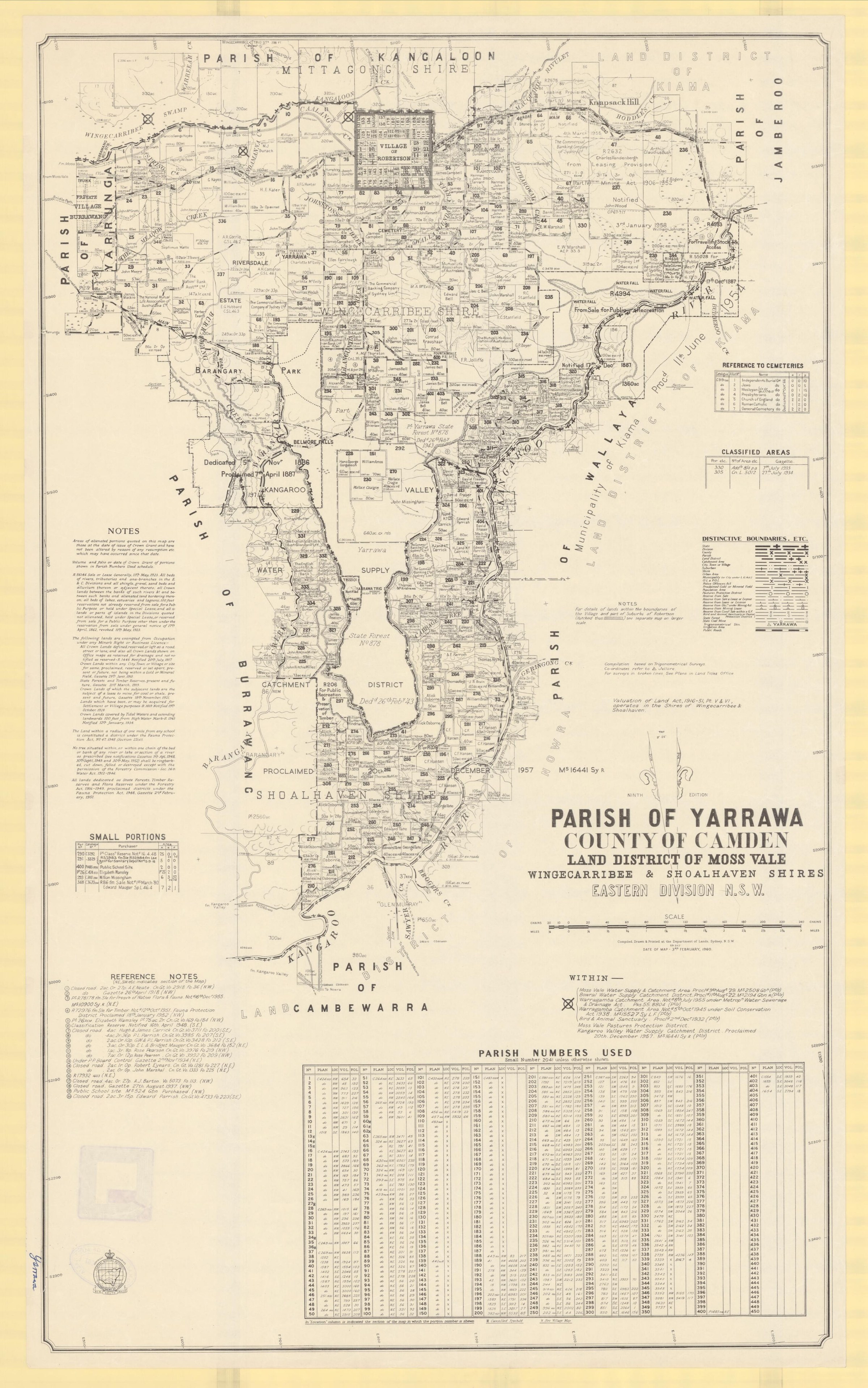
- Parish of Yarrawa, ninth edition, 1960, National Library of Australia
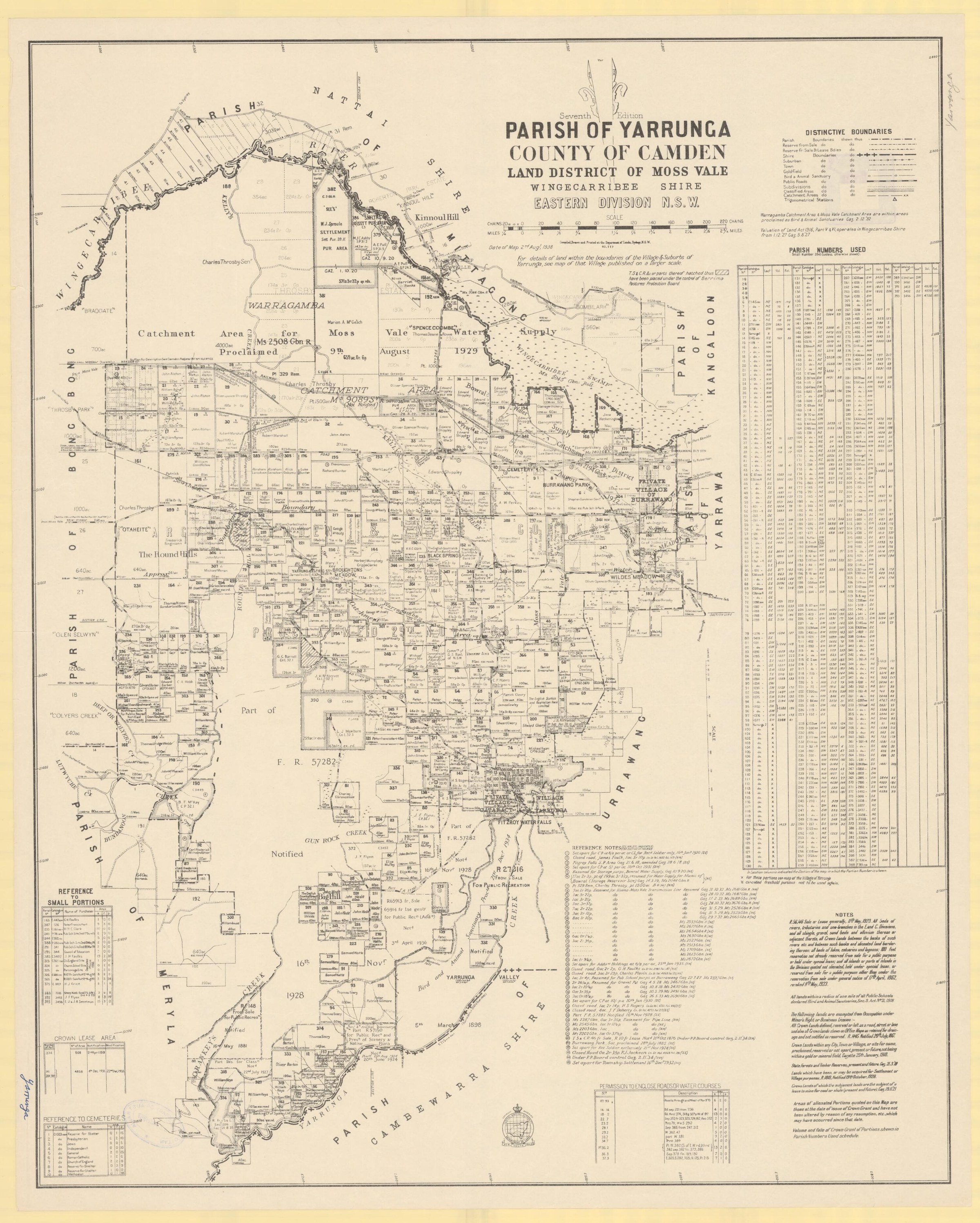
- Parish of Yarrunga, seventh edition, 1938, National Library of Australia
The Society can undertake professional research at $40 per hour. Contact the research centre to discuss your question and request a quote.