Discover Medway
Coal mining, a private railway and the cement industry shaped Medway’s village life.
Explore nearby and connected places: New Berrima · Berrima · Joadja · Berrima Junction
Medway through time
Coal and the railway
The history of coal at Medway predates the later colliery village. In a Society research account reproduced in Council heritage material, Philip Morton dates the Cataract Mine on Medway Rivulet to 1867 and says it was intended to supply the Fitz Roy Iron Works. He describes a later Berrima Coal-Mining and Railway Company, formed in 1880, which built a private connection to the main southern railway. A separate Council history gives 1881 for the formation of a coal company and the start of mining; the difference in dates and companies needs further checking against primary records.[7]
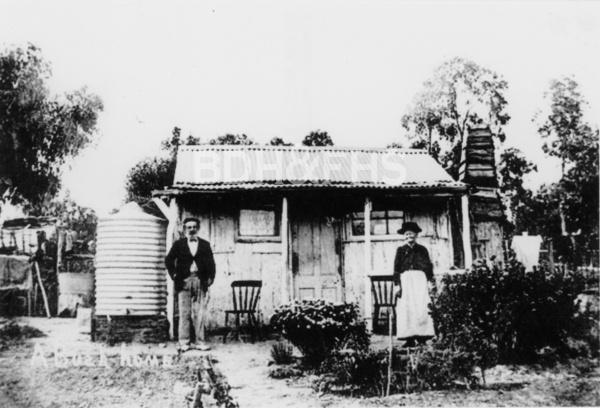
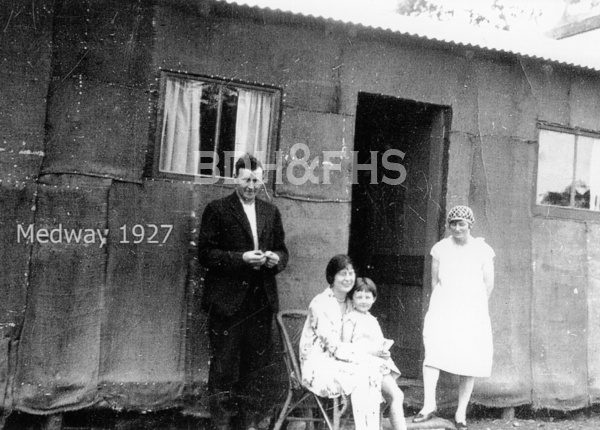
The Society account records a Baldwin locomotive arriving for the private line in 1882 and describes roughly forty miners at the pit. A new phase began in 1923 at the Loch Catherine Colliery; Council dates the growth of the mining village to 1926. Its account describes early bag-and-bark dwellings being replaced by more substantial houses.[7]
Medway’s coal also supplied the Southern Portland Cement enterprise. The settlement’s later milestones were community ones as well as industrial: electricity arrived in February 1946, and a hall built with voluntary labour opened in November 1950. The Society’s SPC / Blue Circle annual volumes offer a useful way to continue exploring the people behind this industry.[7][8]
The colliery community
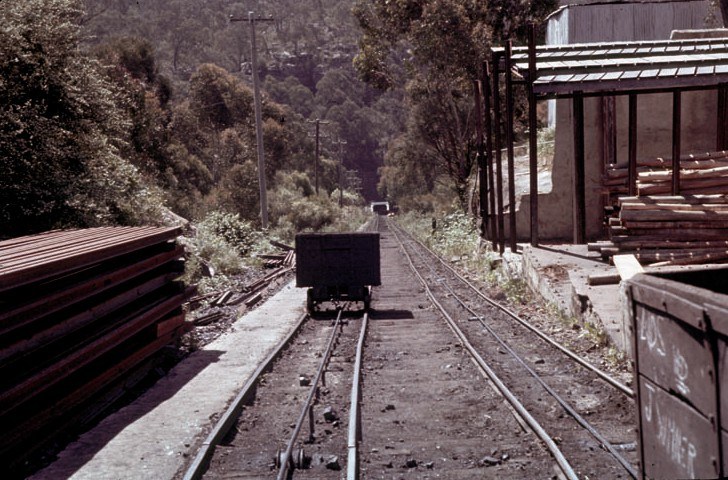
At the Berrima Colliery, horses hauled coal underground to a collection point; a rope-operated skipway and bridge then carried it out towards the railway. The Society’s account says the horses were retired when the mine was mechanised in 1968. Its history is a useful entry point into the work and technology behind the cement industry.[8]
The company magazines also show community life beyond the workplace. The March 1965 staff newsletter reports the Medway miners’ annual picnic at Mittagong, with races and games for children and adults. Such reports can help family researchers connect names with the district, although a mention alone does not establish residence or employment.[9]
The village school also appears in the lives of its teachers. Jane Lemann’s tribute to Trevor Bensley recalls his posting to the one-teacher Medway school, followed by a transfer to Toombong when Medway school closed. It connects the mining village to the wider district through the people who lived and worked there.[10]
More views of Medway
Select a thumbnail to see the larger image. Captions and credits follow the available source records.
Browse local photographs linked to Medway
Explore the Society’s photographs for sale
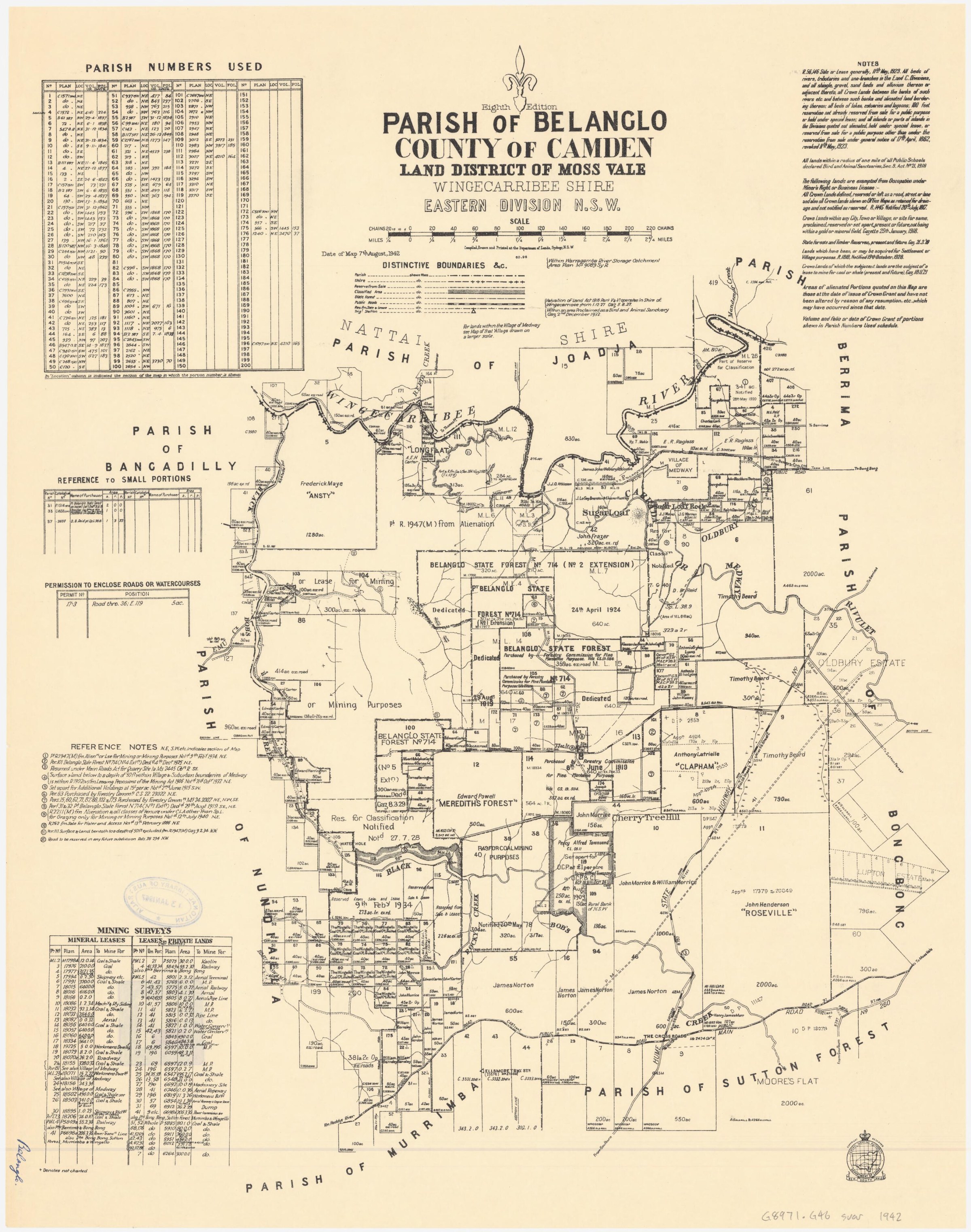
Browse maps and plans linked to Medway
Newsletter Mentions
Stories about Medway in the Society’s newsletters.
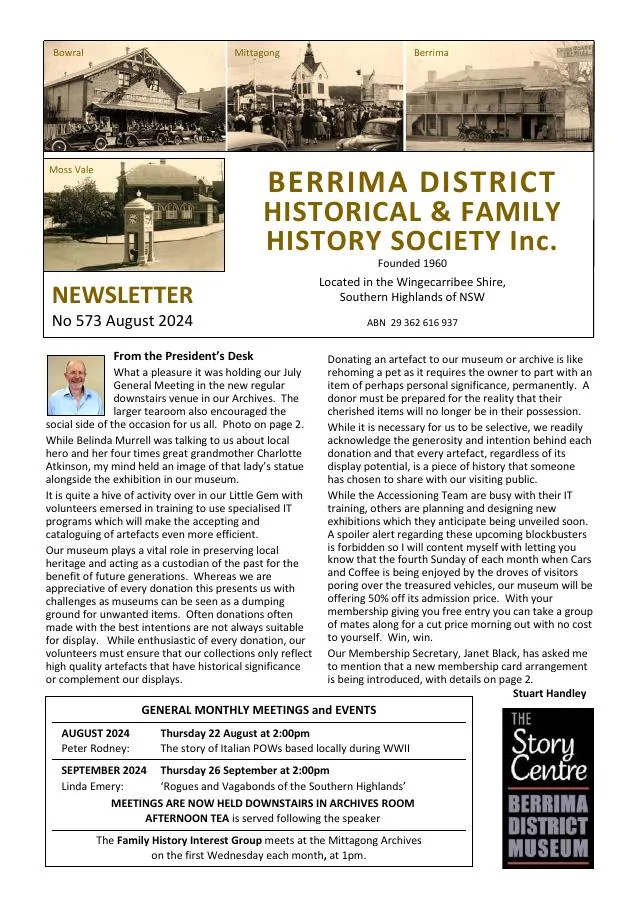
August 2024
- Philip Morton follows Medway coal mining, the railway, construction of the New Berrima cement works and development of the township (pp.6-7).
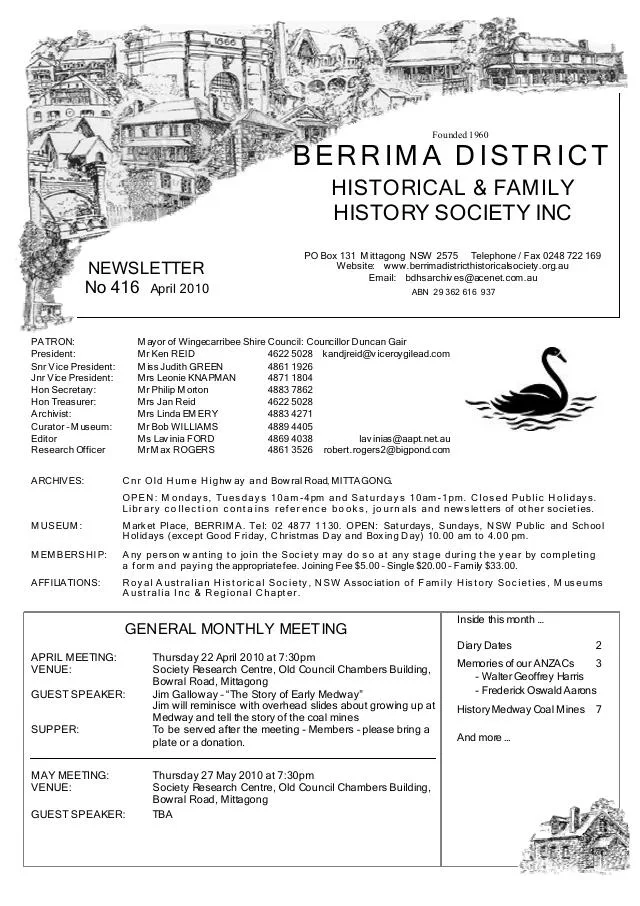
April 2010
- Jim Galloway introduces his recollections of Medway, and a reprinted article traces the coal mines and transport to New Berrima (pp.2, 7).
Books in our Library
These catalogue titles mention Medway. Check the linked catalogue and ask the Society about access.
- The Story of Early Medway 1876 - 20?? (2009) - catalogue p. 71
Further research
There is more to discover about Medway in the Society’s archives and in other collections. A catalogue entry may lead to material that has not been digitised or needs to be consulted in person.
- Ask the Society’s research centre about local files, photographs and records.
- State Library of NSW collections - search photographs, maps, manuscripts and local publications.
- NSW Historical Land Records Viewer - search historical land records, plans and parish maps by place or parcel.
Sources already connected with this place include:
- Council history of New Berrima and Medway, drawing on James Jervis
- Wingecarribee Community Heritage Study, 2021-23: Medway history based on Philip Morton’s Society research
The Society can undertake professional research at $40 per hour. Contact the research centre to discuss your question and request a quote.