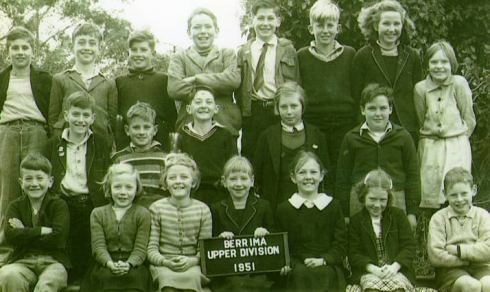
A school history and a pupil history overlap, but they use different records. Start with the school’s place and period, then look for records that actually survive.
Make a start
Identify the school
Record the locality, approximate years, school type and any earlier or later names. Rural schools could move or be renamed.
Look for its dates
Search the NSW government schools history database; check whether the entry describes a particular period or school type.
Find records
Search the State Archives school-records index and the Society’s Yarrunga and Glenquarry indexes. Note each repository, series and page.
Compare evidence
Check a transcript against its source; compare names, guardians and dates with independent family records. Respect access restrictions and living people’s privacy.
What can a register tell you?
An admission register can contain a pupil’s name and age, admission date, guardian, address or occupation; fields and survival vary. A name in an index is a lead, not proof that two people with similar names are the same person.
Museums of History NSW notes that only a small proportion of registers and other student books survive. Its school records index and catalogue can reveal administrative files, photographs and other series even when an admission register is missing.
Follow a school through changes
Search the NSW government schools history database for the locality and possible former names, recording opening, closing, changes of name and school type. Rural schools could move; compare the dates and site with historic maps, local histories and photographs rather than assuming the present address is the original one.
Search Trove for school concerts, prize days, teacher appointments, building tenders, anniversaries and commemorations. Read the page image and note the newspaper, date and page. A photograph may identify a building or group, while a newspaper report can reveal the activities that brought a school community together.
Company newsletters can offer unexpected school clues too. In 1969 the Southern Portland Cement newsletter previewed Berrima Public School’s centenary, recalled a former pupil who began school in 1907, and described a planned memorial at the old village well. Its account distinguishes an earlier National School from the public school opened in 1869: use those dates and names to guide searches, then check the original education records.
Find pupils and surviving records
Search the Society’s Yarrunga and Glenquarry indexes using surname variants, then open the linked source page. Compare the admission date, age, guardian and other available details against family evidence. An index may omit or misread an entry; ask the Society about the source register and other local records.
Use Museums of History NSW’s school-student records guide and catalogue to identify surviving admission registers, teacher records and administrative files. Some are held on site or subject to access conditions. Bring a pupil’s name, approximate years and locality to the research centre; school photographs, family files and local histories can offer further clues.
A worked example
This example is fictional and illustrates a research method, not a real historical finding.
Did a child attend the school now called Avoca?
Suppose a family note names Yarrunga in 1900. Establish the school’s historical names and dates first, then search the Society’s Yarrunga admissions index using surname variants.
Open the linked original index page and compare the admission date, guardian and other available details with the family’s independent records. Ask the Society about the fuller register if the index alone cannot answer the question.
Trace a school through a changing building
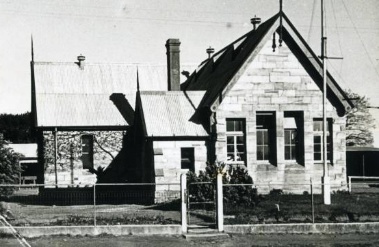
A school’s history can continue after the pupils leave. Mittagong’s stone public school opened in Queen Street in 1878, replacing an earlier school behind the Wesleyan Church. Society research identifies Charles Grove as its builder and records that the building later became Mittagong Library. Stonemason Joseph Lee also worked on the school and other Mittagong landmarks, connecting the building’s story with that of a local family.
Compare school registers, education records, photographs and local newspapers to follow the people and the building through different periods.
Read the Society’s account of the school · Meet Joseph Lee and his family · Explore Mittagong
Useful resources
- Trove - Notices, reports, advertisements, people and place context.
- Museums of History NSW / State Archives family-history guide - Convicts, assisted immigrants, probate, schools, land and NSW government records.
- Wingecarribee Public Libraries Local Studies - Local newspapers, photos, rate books, cemetery registers and council material.
- Yarrunga admissions index
- Glenquarry school finding aid
- NSW government schools history database
- NSW archives guide to school student records
Explore the full research resource directory · Search the Society library catalogue · Browse Society newsletters
Let the Society help with your research
The Society can undertake professional research at $40 per hour. Tell us what you would like to discover, what you already know and any records you have checked. Contact the research centre to discuss your question and request a quote before work begins.
Email [email protected] or call (02) 4872 2169.
Common questions
Are all school registers online?
No. Survival, digitisation and access vary. Search the archives catalogue and ask the Society about locally held copies.
Does an admission record prove a birth date?
An age can suggest a date range, but it is not a birth certificate. Compare it with independently sourced records.