Discover Belanglo
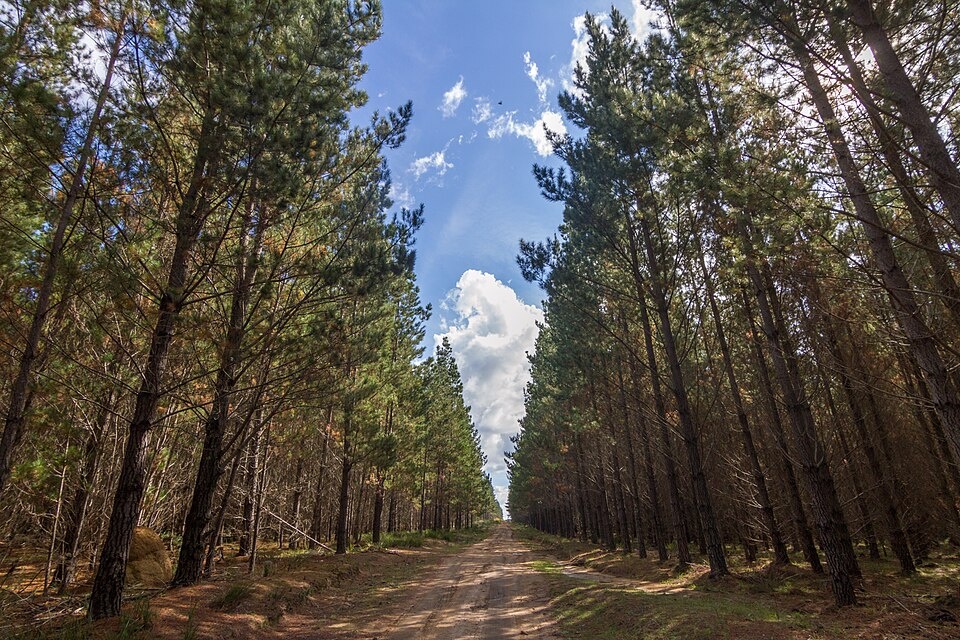
Belanglo’s landscape brings together native bush and a working forest: the first radiata pines were planted here in 1919.
Explore nearby and connected places: Sutton Forest · Canyonleigh · Berrima · Penrose · Wingello
Belanglo through time
Planting the forest
The first radiata pines in Belanglo State Forest were planted in 1919. The NSW Government’s forest account places those plantings within the Southern Highlands’ commercial timber landscape. The forest contains both pine plantation and native vegetation, so its appearance reflects different histories of planting, harvesting and retained bushland rather than one untouched landscape.[3]
Belanglo and nearby Penrose were among the early southern NSW pine plantation areas. A forestry history places their establishment in the 1910s, followed by Wingello in the 1920s. The Forestry Corporation notes that an old cottage once stood at Dalys Clearing; it is now a forest recreation area. Visitors should check the Corporation’s current notices before setting out.[5][6]
The 1925-26 Forestry Commission annual report includes photographs of Belanglo plantings from 1919 and 1922. These provide dated evidence for comparing the early plantation with later maps and photographs. Forestry records, local workers’ histories and aerial images can together explain how the district’s working forests changed over time.[4]
The plantation community and later history
The plantation was also a place where families lived and children went to school. The Forestry Commission’s 1925-26 annual report says the Commission erected and furnished a schoolhouse for the children of plantation employees, while the Department of Education supplied a teacher. The report recorded sixteen children attending at the time. This small school offers a starting point for research into the workers and families behind the early forest.[4]
The forest is also associated with profound loss. In 1992 and 1993 the remains of Joanne Walters, Caroline Clarke, Deborah Everist, James Gibson, Simone Schmidl, Anja Habschied and Gabor Neugebauer were found in the forest. Ivan Milat was convicted of their murders in 1996. Their families and communities remain central to this history.[7]
Explore the Society’s photographs for sale
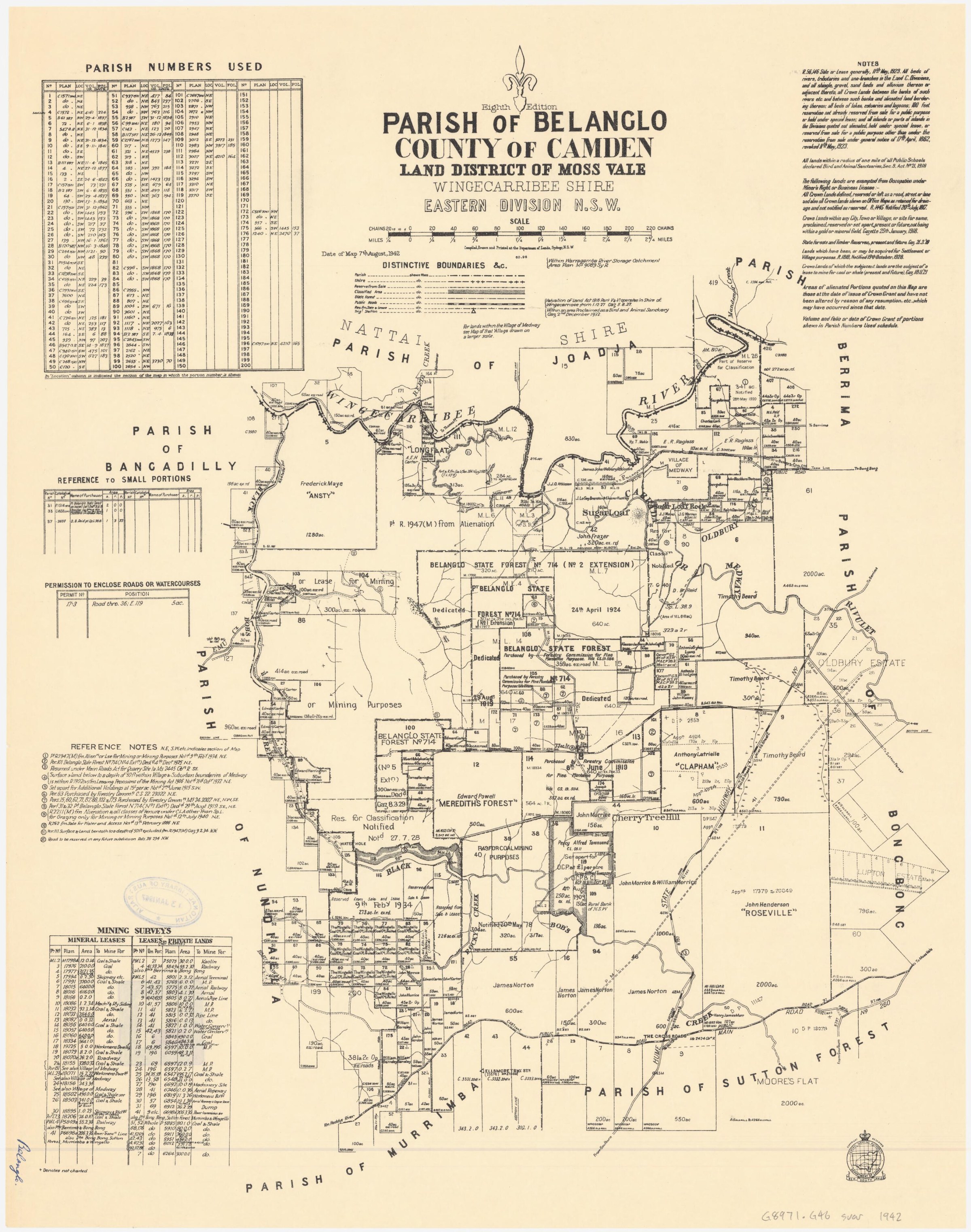
Browse maps and plans linked to Belanglo
Explore the newsletters
Search newsletter contents for Belanglo. You can also try nearby places, former names and other spellings.
Further research
There is more to discover about Belanglo in the Society’s archives and in other collections. A catalogue entry may lead to material that has not been digitised or needs to be consulted in person.
- Ask the Society’s research centre about local files, photographs and records.
- State Library of NSW collections - search photographs, maps, manuscripts and local publications.
- NSW Historical Land Records Viewer - search historical land records, plans and parish maps by place or parcel.
Sources already connected with this place include:
The Society can undertake professional research at $40 per hour. Contact the research centre to discuss your question and request a quote.