DP1304452 - Whytes Corner
Moss Vale property history
The Arthur Street shopfront at 426 Argyle Street
A prominent retail corner with a long Whyte family association, on land near the vanished Throsby Villa. The shop’s story can be followed through advertisements and photographs; its full registered title chain remains to be connected.
The parcel today
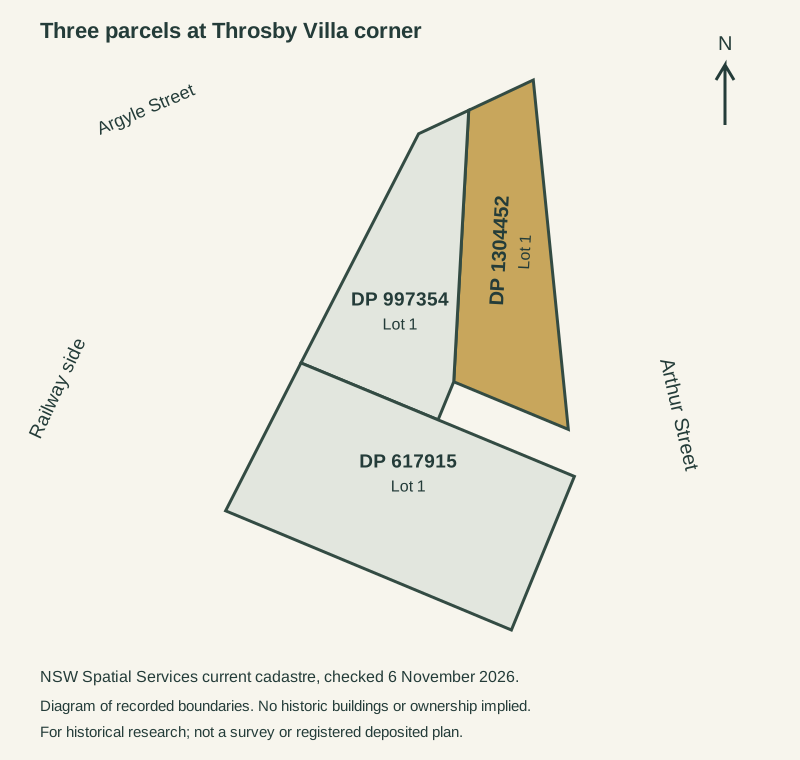
- Land identifier
- Lot 1 DP1304452
- Recorded area
- 967.451 square metres
- Precinct
- Argyle, Arthur and Throsby streets, Moss Vale
- Research basis
- Free records; original sources linked below
The highlighted outline comes from the present cadastral map. It identifies the land being researched; it does not date its buildings, identify an owner, or establish that the lot existed in this form in the nineteenth century.[11]
Land and ownership
This chronology separates records about the older estate and house from evidence tied to this present parcel. Gaps in registered ownership are left visible.
14 December 1872 House in the parent estate
Throsby Villa is documented
A birth notice records Oliver Spencer Throsby’s wife giving birth to a premature son at Throsby Villa. It securely dates the house’s existence, but supplies neither a construction date nor a modern parcel reference. The original Villa and the later shop or council chambers must be distinguished.[15]
30 September to 14 October 1882 Estate subdivision and sale
The estate becomes streets and allotments
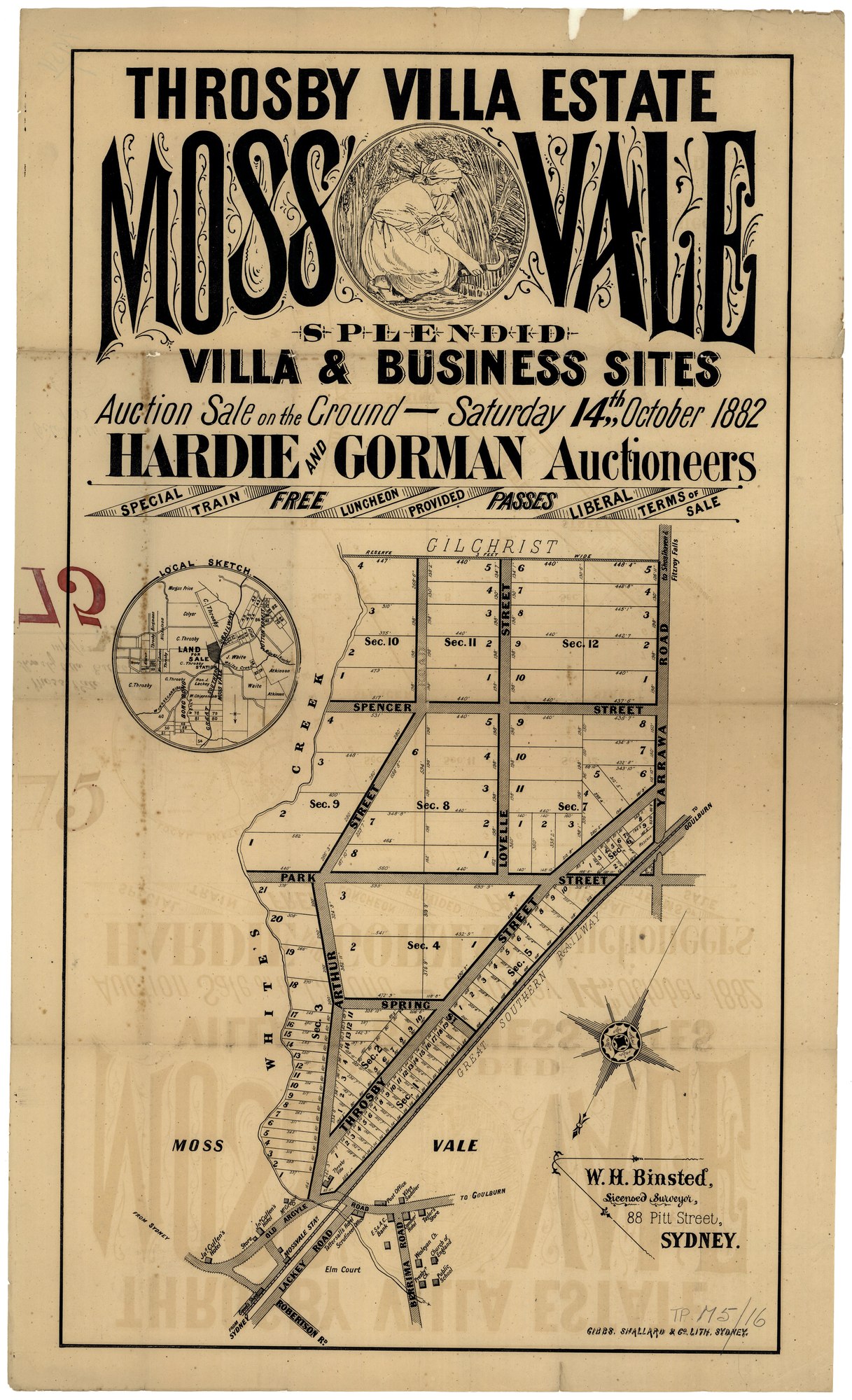
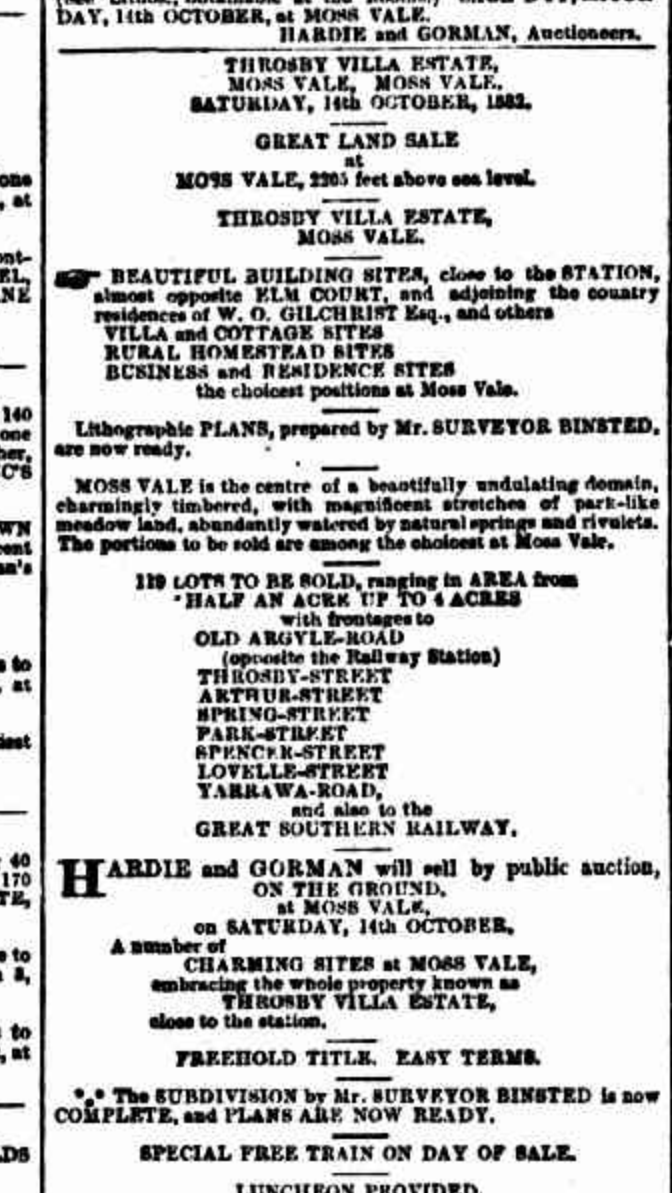
The 30 September advertisement offers 119 lots with frontages including Arthur Street. Binsted’s surviving poster advertises the 14 October auction and depicts the Villa near the railway, Old Argyle Road and Arthur Street. A report published on 16 October says Throsby Villa realised £750. It does not identify its purchaser. Historical Lot 1 and modern Lot 1 in each DP are separate systems of numbering.[13][12][14]
December 1886 Former Villa site
Fire ends the original house
The Goulburn Herald reports a fire starting in the detached kitchen and spreading through a covered passage. Members of the Light Horse helped remove furniture; Sergeant Crotty and J. Riley rescued three sleeping children. With little water or equipment, the house was destroyed. The report identifies Mr Lovell as its owner and describes its successive uses as a hotel, Throsby residence, bank, James Cullen’s rented family home and Lovell’s boarding establishment. These are reported building uses, not a complete registered ownership chain.[16]
2 February 1887 Former Villa site
The grounds return to the market
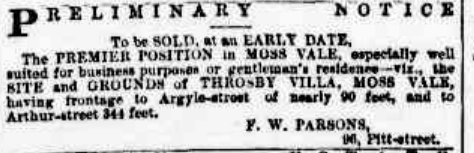
F. W. Parsons advertised the site and grounds of Throsby Villa as suitable for business or a gentleman’s residence. The stated frontages were nearly 90 feet to Argyle Street and 344 feet to Arthur Street, approximately 27.4 and 104.9 metres. This is a valuable geographic bridge after the fire, but the notice names no buyer and cannot alone allocate the land among today’s three DPs.[17]
By 4 June 1921 Contemporary business advertisement
S. Whyte moves to the Arthur Street corner
S. Whyte advertised that he had removed to new premises at the corner of Argyle and Arthur streets. He described himself as a practical tailor, offering ladies’ and gentlemen’s tailoring on the premises and specialising in ladies’ riding costumes. This establishes the corner location by 4 June 1921. It is stronger dating evidence than the heritage trail’s later 1922 statement, although it does not prove the day of the move or the building’s completion.[22][18]
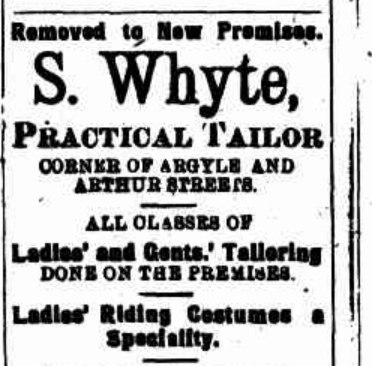
Removed to New Premises: S [3] 1 September 1929 Legal business notice
John Dominic Whyte continues the family firm
A Government Gazette notice states that Samuel Thomas Whyte and John Dominic Whyte dissolved their partnership as tailors and mercers, S. Whyte & Son, from 1 September 1929. John was to receive and pay the firm’s debts and continue the business at the same place under the same name. This identifies the people and business succession precisely, but conveys no land.[24]
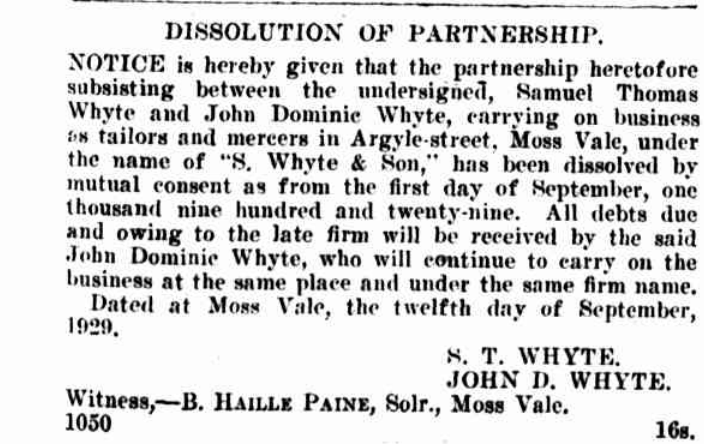
The legal notice identifies Samuel Thomas and John Dominic Whyte and the continuing firm [4] 1940 Proprietor’s life
Samuel Thomas Whyte is remembered
Samuel’s obituary describes a Melbourne-born tailor who came to the district about 45 years earlier. It says he later handed the business to his son and retired to Robertson. It remembers his Catholic Church work and early interest in football, and records his burial at Moss Vale. The approximate retirement interval in the obituary should not replace the exact 1929 legal notice.[25][24]
1945 to 1954 Numbered-address advertisements
Whytes, The Corner Store, at 426 Argyle Street
A 1945 jodhpurs advertisement names Whytes, The Corner Store, at 426 Argyle Street, with phone 207. It offered mail orders, paid postage and priced garments in money and wartime clothing coupons. A 1952 fashion advertisement repeats the address, and a 1954 coat advertisement names Whytes Pty Ltd. These notices carry the tailoring and clothing business into the middle of the century without presuming that the business company held the land.[26][27][28]
Recent years Business and marketed premises
Whytes relocates; the old corner is offered for lease
Whytes now gives 3/458 Argyle Street as its address. May Estates markets the former 426 Argyle corner and describes shared parking and an approximately 100 square metre corner tenancy. The agent’s approximate land area differs from the present cadastre. Neither the listing nor the business website supplies a full land-title chain.[20][21][11]
People and premises
A family business at two corners
Whytes’ own history places its beginnings in Burrawang in 1895. The heritage trail summarises a Moss Vale business from 1895. Samuel’s obituary also points approximately to the mid-1890s, but does not settle the first town. These are different kinds of accounts, and none proves the current corner building existed in 1895.[20][18][25]
The White Street shop and the Arthur Street shop are different premises. Early 1921 advertisements still offered Wynne & Holt’s temporary offices behind S. Whyte’s shop, entered from White Street. By June, Whyte’s own notice named the Argyle and Arthur Street corner. This provides a much tighter sequence than carrying the Whyte name across every earlier Argyle Street reference.[23][22]
Tailors, mercers and a family succession
The 1929 notice supplies both full names: Samuel Thomas Whyte and John Dominic Whyte. It is evidence for a working family firm and John’s continuation of it. Later accounts associate J. D. Whyte with other properties, including Ellerslie on Illawarra Highway; those separate house histories must not be imported as the ownership chain of this shop.[24]
The mid-century advertisements show a business serving both local customers and people ordering by post: riding clothes in the 1921 notice, then jodhpurs and coats in later advertising. They add everyday commercial detail to a building whose exact landowners and construction date still need registered records.[22][26][28]
The corner after Whytes
The current business website gives Whytes’ address as 3/458 Argyle Street and describes its relocation from Whytes Corner. May Estates’ leasing listing identifies 426 Argyle Street as the former shop, with a corner retail tenancy and shared parking. These sources document business locations and the marketed premises, not the identity of the registered landowner.[20][21]
Maps and photographs through time
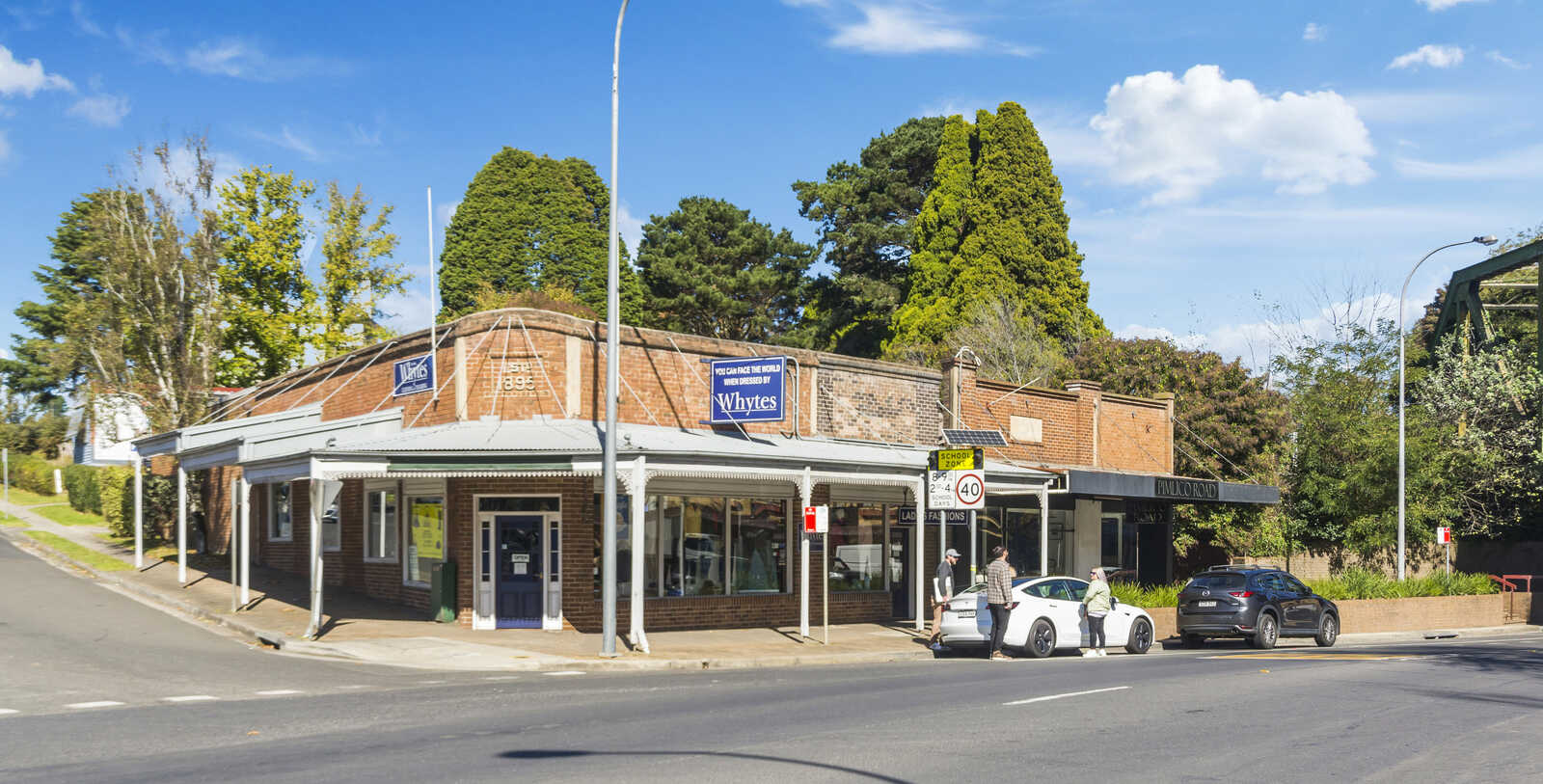
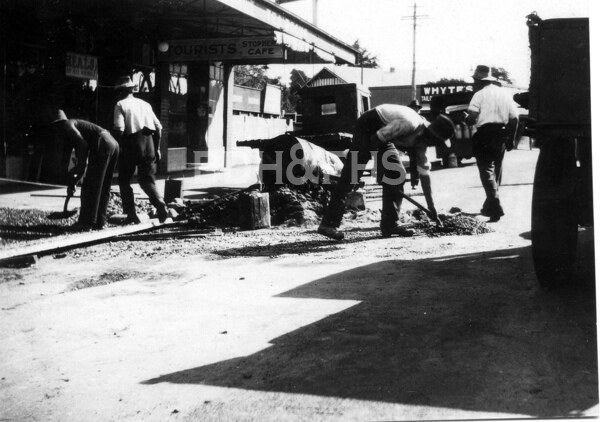
Select an image to enlarge it. Captions identify its date, source and what it can establish.
What is still unresolved?
When was the present building erected? The June 1921 announcement proves business occupation at this corner by then, while the walking guide says 1922. The advertisement receives priority for the move date; neither date alone settles construction.[22][18]
The heritage schedule gives Whytes shop the identifier Lot 426 DP111119, which conflicts with the mapped lot. The address and heritage significance can be discussed, but that inconsistent legal description should not be used to construct an ownership chain.[19][11]
A complete chain from the earlier estate to DP1304452 has not yet been proved from free records. The estate’s auctioneer, the shopkeeper and the title owner must not be treated as interchangeable.
Who was Arthur Street named for? The name is documented by 30 September 1882, but the naming decision and namesake have not been established. The poster’s presence of the name is not an explanation of its origin.[13][12]
Further research opportunities
Free records to pursue
- Compare the registered lot outlines with estate plans, HLRV charting maps and any surviving council survey or building-application drawings. A similar outline is a lead, not a substitute for a title reference.
- Consult the Society’s rate books, building records, photographs and local-history files. Recorded ratepayers may be owners or occupiers; retain the original column headings.
- Search Trove under business names, surname variants and changing street addresses. Earlier newspapers often omit house numbers, so a matching name alone is insufficient.
- Inspect State Archives NRS-8230, SR Map 6208, an undigitised Bong Bong parish manuscript catalogued approximately 1830s to 1850, if free reading-room access is available. Its coverage has not yet been verified.
- Extend the Newspapers.com searches through its local holdings using the verified business, owner and address variants. Initial browser searches and an inspected 1920 page produced unrelated page-level matches; this was not an exhaustive survey.
Paid documents that could close the gaps
- A current title search and registered deposited plan for this lot, followed by any prior-title search and earlier plans identified on them. No fee-bearing search has been ordered.
- The plan’s administration sheet and relevant transfers or primary-application packet, only after the free indexes identify the precise references. Confirm cost and availability before ordering.
Researched using free data and openly accessible historical records. Last reviewed 6 November 2026. Historical newspapers accessed through Trove, National Library of Australia. Copyright in credited third-party photographs remains with its owners.